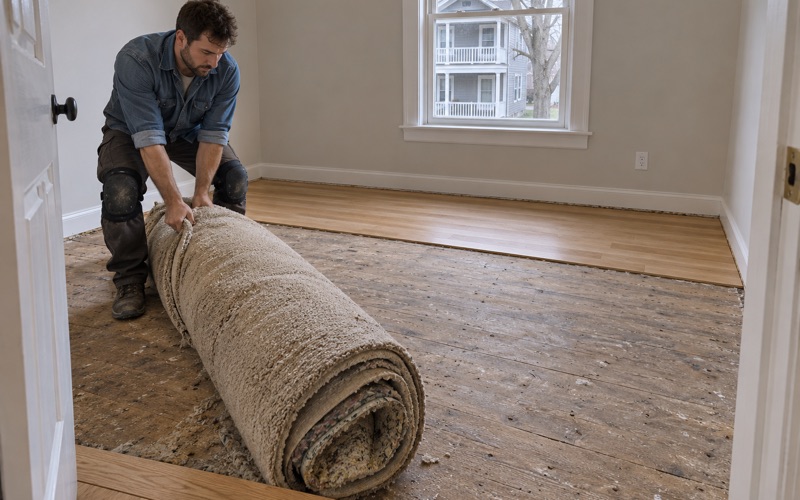
Newton Wood Flooring brings more than 20 years of wood flooring work in Boston to a kind of job that often starts with a housing inspection rather than a design idea. A clinician makes a referral, an inspector walks the unit, and worn carpet ends up on the list of conditions the owner has to correct. Our part begins when that carpet and its pad come up.
What sits underneath is rarely a blank slate. In an older unit we usually find original strip flooring, sometimes old tile with black mastic, and now and then the stain or soft spot left by a leak nobody fixed. Each of those changes what the floor can become, so we look before we quote and say plainly what we found.
The order of the work matters. Moisture gets traced and dried first, then the floor is either refinished or replaced, and the sanding and finishing are planned for a household where someone has asthma. We do not promise a health result from any floor; we promise a sound, dry, cleanable surface put down with as little dust as the work allows.
Breathe Easy at Home and the Damaged Carpet Citation
Boston runs a home inspection that a doctor can order. Knowing how that program works helps an owner, a property manager or a tenant understand why a floor job landed on their calendar, and what the inspector is and is not asking for once the carpet has been cited.
A Referral From a Doctor, Nurse or Health Professional
Breathe Easy at Home is a web-based referral system. Doctors, nurses and other health professionals use it to refer Boston patients with asthma for a home inspection, and that inspection is carried out by the Boston Inspectional Services Department. The program is a partnership of ISD, the Boston Public Health Commission and Boston Medical Center.
A resident with asthma does not have to wait on a clinician, either. Self-referral runs through the Breathe Easy Coordinator at the Boston Public Health Commission. Either way the result is the same: an ISD inspector comes to the unit looking for specific housing conditions, rather than offering general advice about the home.
Damaged Carpeting Among the Sanitary-Code Triggers
The inspectors look for asthma triggers covered by the sanitary code: mold and chronic dampness, leaks, pest infestations, drafty doors and windows, no heat, poor ventilation and damaged carpeting. In practice carpet and moisture often show up together, because a carpet that has been wet underneath tends to be the one that is worn, stained and smells of it.
Damaged carpeting is a broad phrase, so we read the actual carpet rather than the label. Torn seams, matted traffic lanes and pet urine stains are surface problems. A pad that crumbles, a musty smell at the tack strip or a dark ring near a radiator points to water, and that changes the whole job.
What the Owner Is Asked to Correct
ISD conducts the inspection, and the property owner is notified of any violations. The inspector then works with the owner to achieve compliance. The program flyer does not say carpet must be replaced with any particular flooring, so whether the room ends up with refinished oak, new wood or another surface is the owner’s decision.
That decision tends to reach us quickly. In a city where 64.3 percent of households rent, the person calling us is usually an owner or a manager, while the person living with the floor is a tenant. We schedule around the occupied unit and make sure both of them know what the work involves and how long each room will be out of use.
Looking for wood-flooring closer to Norwood? See Wood-Flooring Services in Norwood.
What Is Under the Carpet in an Older Boston Unit
Boston is the capital of Massachusetts, with 675,647 residents at the 2020 census, and much of its housing is old. Of 310,625 units in the Census Bureau’s 2024 five-year estimates, 145,114 were built in 1939 or earlier, which is 46.7 percent. Carpet laid over that stock usually hides one of a few things.
Pad, Tack Strip and Staples
Carpet removal in an older unit is more than rolling up a rug. Underneath sit the carpet pad, a ring of tack strip nailed around the walls and often hundreds of staples holding the pad down. We pull all of it, collect the pad debris with a HEPA vacuum, and remove or set every fastener before anyone judges the wood.
The pad deserves care on the way out. Old foam and rubber pad breaks down into crumbs and dust, and in a unit cited for damaged carpeting it may hold years of debris. We bag it in the room rather than dragging it through a shared hallway, which keeps the mess in one place.
Original Oak, Maple or Pine Strip Flooring
In a prewar building the most common find is original red oak strip flooring, sometimes maple, and in older rooms eastern white pine, fastened with cut nails or flooring cleats. Carpet often protected it well. Apart from tack strip holes along the walls, rug shadow and a few water stains, the boards can be in better shape than anyone expected.
We still check before we promise a sanding. Floors that have been sanded several times can be thin, so we measure how much wood is left above the tongue. We also look for old house borer or powderpost beetle signs, such as small exit holes and frass, which carpet can hide for years.
Old Tile, Black Mastic and Hidden Patches
Some rooms reveal resilient floor tile instead, often with black mastic underneath. We identify that material and do not sand, scrape or grind it, because older tile and its adhesive can contain asbestos. The work stops until the right trade has handled it, and we come back once the floor is clear.
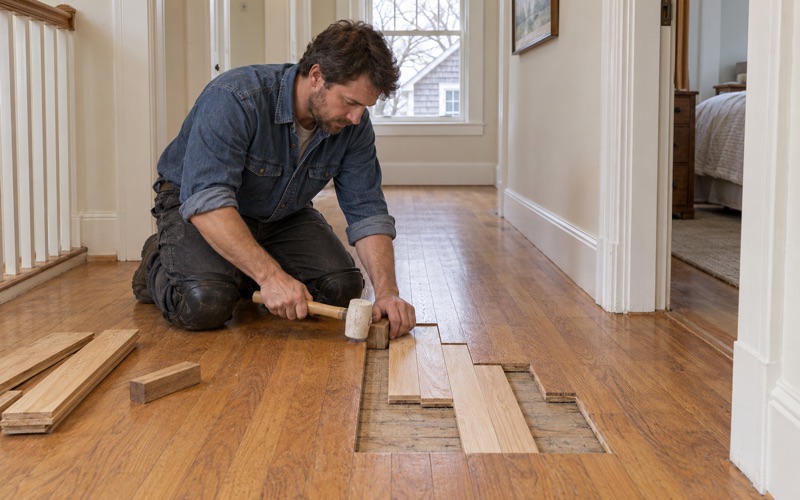
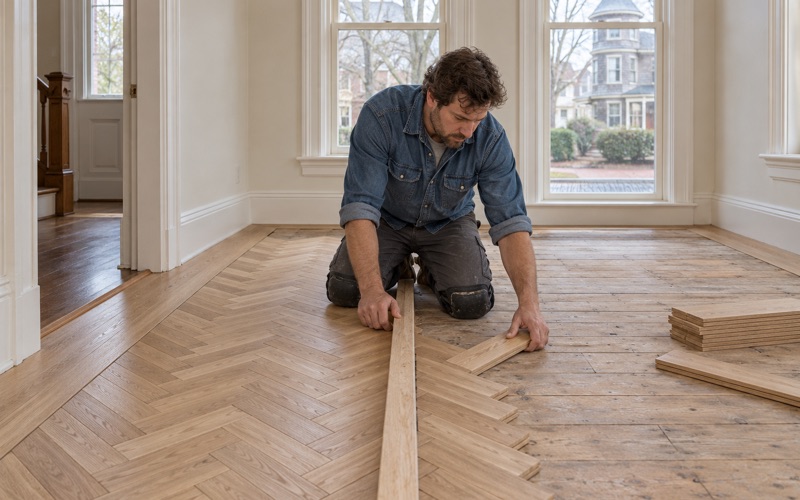
Other rooms show patches: a hole where a steam radiator and its pipes came out, or a strip of plywood where a wall once stood. We weave matching boards into the floor so the repair reads as floor rather than as a filled scar, which matters once the carpet that hid it is gone for good.
Moisture and Leaks Before Any Wood Goes Down
Mold, chronic dampness and leaks sit on the same trigger list as the carpet, and in our experience they are often why the carpet failed. Laying wood over an unsolved leak simply moves the damage into a more expensive material, so drying comes first on every job of this kind.
Tracing the Water to Its Source
A dark stain under the pad near a radiator, a toilet or an exterior wall tells us where to look, not what happened. We trace it to a pipe, an appliance, a window or the roof, and the owner’s plumber or roofer fixes the source. Leaks are a sanitary-code trigger in their own right, so the inspector will expect that fix too.
Where a burst pipe or an overflowing appliance did the damage, we also document the floor room by room for the adjuster. Photos, moisture readings and a description of the affected boards give an insurance claim something concrete to work with, and they record the floor’s condition before any of it is removed.
Reading the Subfloor With a Moisture Meter
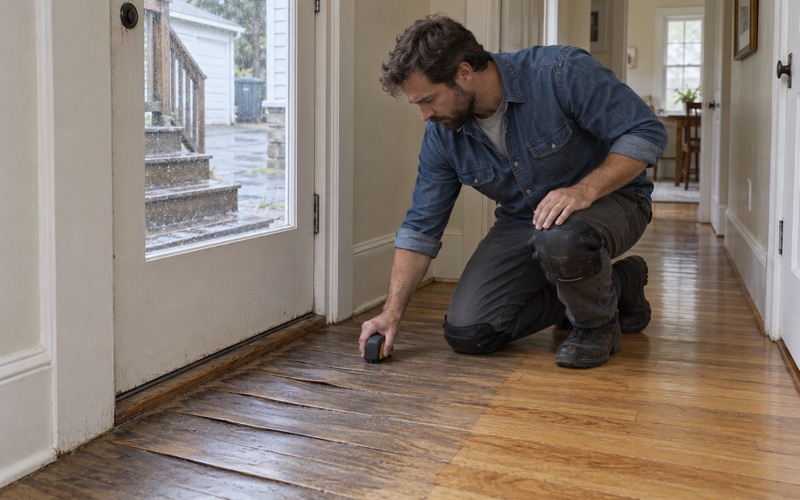
Once the source is fixed, we read the boards and the subfloor with a moisture meter, across the stained area and into the dry parts of the room for comparison. Cupping, crowning and buckling tell part of the story, but the meter tells us whether the wood has actually returned to a stable level.
Drying takes the time it takes. We would rather leave a room bare for a few extra days than sand a floor that is still wet and watch it cup again. The seasonal swing from humid summers to heated, dry winters matters here too, because new boards need acclimation to the conditions they will actually live in.
Lower Levels and Garden Units
Below-grade rooms and garden-level units are a separate case. If carpet came out of a lower-level room that measured damp, we usually recommend engineered wood rather than solid, laid over a suitable vapor retarder. The choice is matched to the moisture we measured there, not to the look someone hoped for, and we explain the reading before anything is ordered.
Refinishing or New Wood, With the Dust Kept Down
With the floor dry and the fasteners gone, the question becomes whether to bring back what is there or put down something new. For a household where someone has asthma, how the work is done matters as much as which option is chosen, so we plan the two together.
Bringing Back the Original Floor
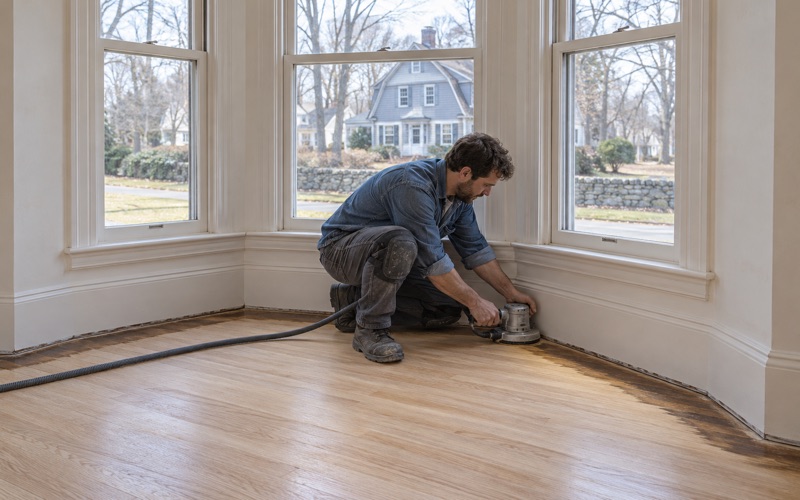
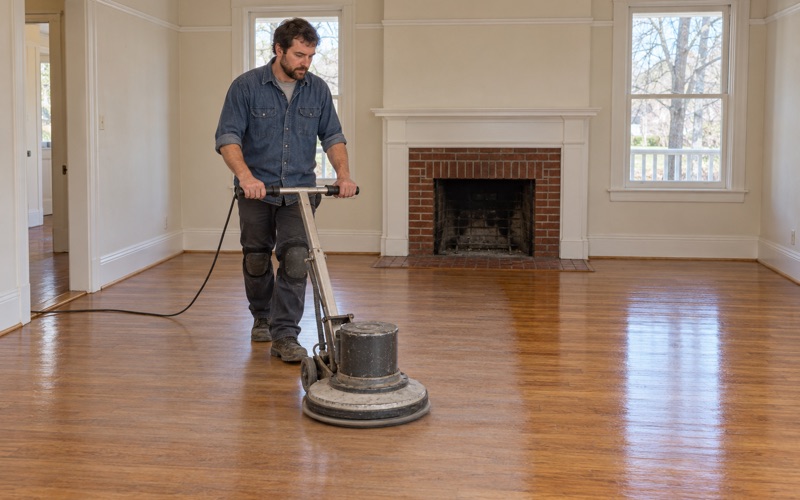
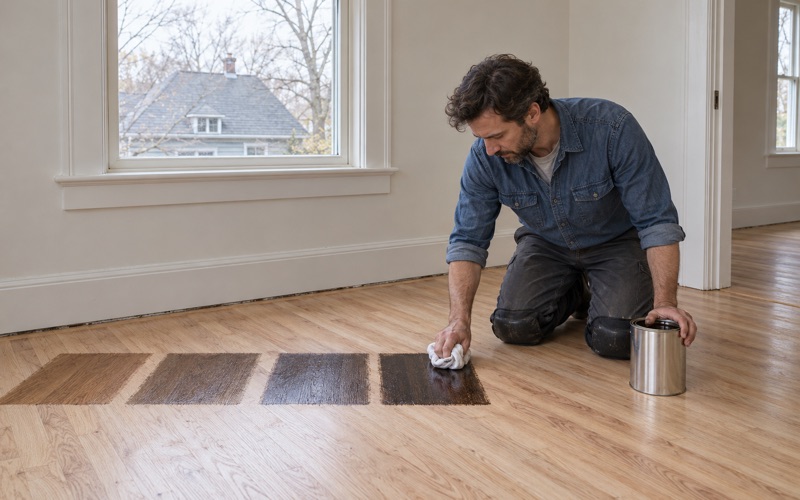
When the original boards have enough wood left, refinishing is usually the better use of them. We sand through a measured grit sequence, test for wax residue or an old shellac finish that would stop new coatings from bonding, and lay stain samples on the floor itself so the color is judged in the room’s own light.
Tack strip holes, pet urine stains that went through the boards and damaged pieces near a former leak are handled by board replacement, weaving in matching wood so the finished floor reads as one surface. We then pick a finish that fits the Massachusetts VOC limits for wood coatings, which are stricter than the federal ones.
When New Wood Makes More Sense
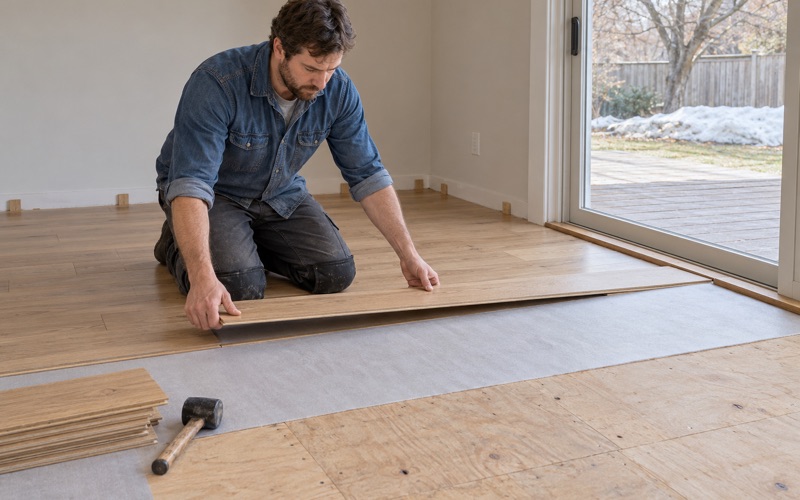
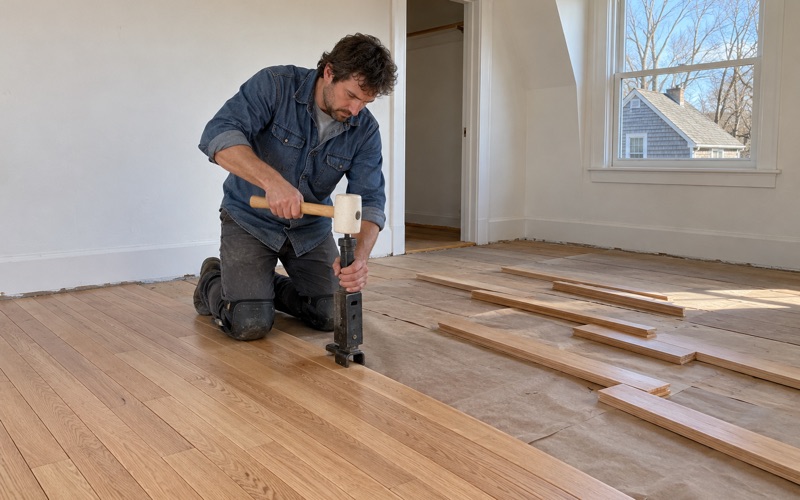
Sometimes the original floor is too thin, too damaged or was never finished wood at all, only a plank subfloor meant to be covered. Then new boards are the honest answer. Prefinished flooring keeps most of the coating work out of the unit, while site-finished white oak or red oak lets us match an older floor in the next room.
We check the subfloor and joists before anything is nailed, leave an expansion gap at the walls, and finish transitions with a reducer, threshold or quarter round where the new floor meets an existing one. If other trades are still working in the unit, we schedule and protect the new floor so their work does not undo ours.
Low-Dust Methods for a Household With Asthma
In a home built before 1978, we check the build year and any painted surfaces before sanding. In Boston, lead is most commonly found in the paint of homes built before 1978, and Massachusetts runs its own lead-safe renovation rules under 454 CMR 22.00. We sand with dust-collecting equipment and HEPA vacuum between passes.
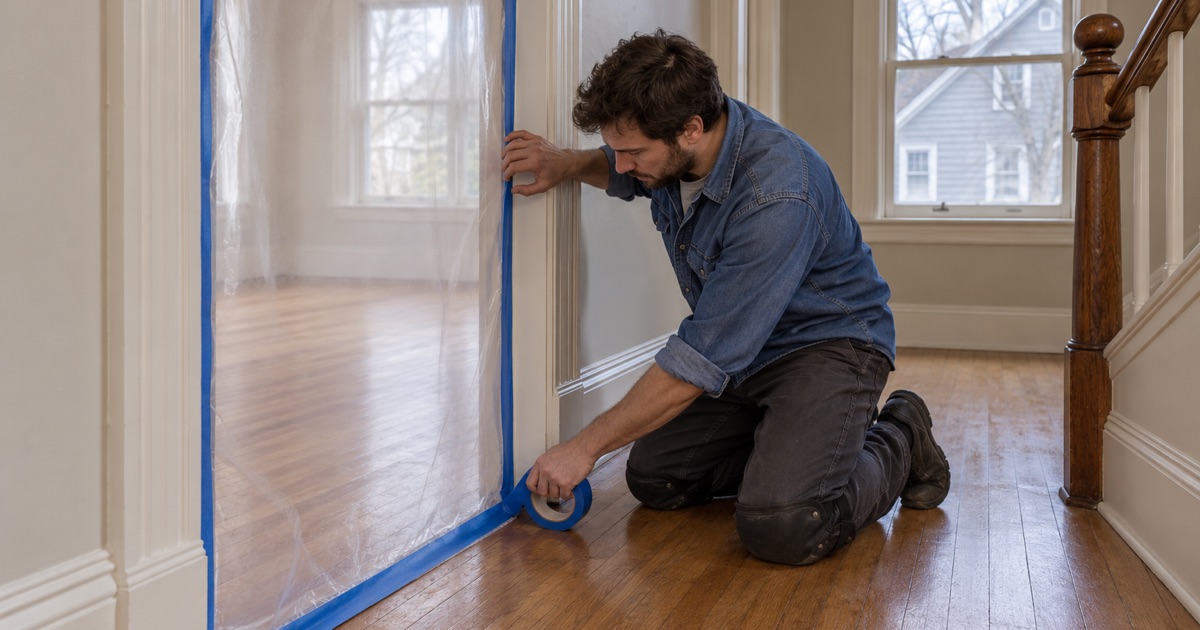
We cannot promise that any floor will change how a person breathes, and we do not try. What we can do is keep dust out of the rest of the home: sealing doorways, containing the work to one room or one floor, choosing a waterborne polyurethane where it suits the job, and leaving the space clean before the household moves back in.
- 20+ Years on Wood Floors
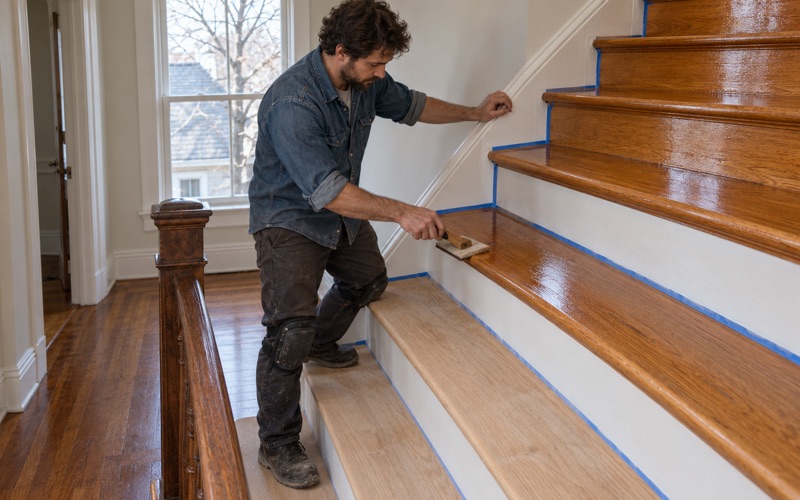
- Stairs Quoted Tread by Tread
- Lead Checks Before Sanding