Newton Wood Flooring has spent more than 20 years on wood flooring in Chelsea and the surrounding area, and the Chelsea jobs that teach us the most are first condos. A buyer who has just closed on a unit in an older building inherits floors someone else chose, maintained and sometimes covered up, and the decisions made in the first months shape the next several years.
This page is written for that buyer. We walk through the city’s down payment loan and why it steers first purchases toward condominium units, how to judge an older unit’s floor before the offer is final, what association documents tend to say about floors and the layers under them, and how to time the work around a home you plan to keep.
We are not lenders, and we do not administer any city program. What we bring is a floor mechanic’s reading of the unit: how much wood is left, what is hiding under carpet or tile, and what the building will let you do. That reading costs less before closing than after, and it often changes the budget.
Chelsea’s Down Payment Loan and the Pull Toward Condos

The City of Chelsea’s Housing and Community Development office runs a First Time Homebuyer Down Payment Assistance Program, and its terms explain a lot about which homes first-time buyers end up in. We summarize it here only as the city’s own program page states it, so confirm the current terms with the city before relying on any figure.
What the City Lends
According to the program page, loans of up to $10,000 are available for a non-subsidized property. The assistance is a 0 percent interest deferred payment loan with a five-year term, and there are no monthly payments on it. For a first purchase, that money usually goes toward closing rather than floors, which is one reason the floor budget deserves its own line.
The forgiveness terms are what matter for planning. If the buyer keeps owning the home and living in it as a primary residence for five years from the purchase, the loan is forgiven and becomes a grant. Selling the home or converting it to a rental within those five years means repaying a portion of it.
Which Homes Qualify
The program page lists two kinds of eligible property: condominium units and single-family residences, occupied by the owner as a primary residence. It does not list two-, three- or four-family buildings. Other regional programs carry their own rules, so that list belongs to this one program, but it is the list a first-time Chelsea buyer is likely to read first.
In practice, that shapes the search. The American Community Survey counts 1,194 detached single-family houses among Chelsea’s 14,165 housing units, so a buyer using this loan is often looking at condominium units instead, many of them carved out of older multi-unit buildings. That is where the floor questions on the rest of this page come from.
What That Means in a City of Renters
Chelsea is mostly a renters’ city. Of 13,716 occupied households, 3,568 own their home, which is 26.0 percent, and buildings with three or four units are the largest housing type, at 3,871 units. A condo for sale in a building like that may share walls, ceilings and floor framing with households that rent.
Age adds to it. The same survey counts 7,020 of 14,165 units built in 1939 or earlier, or 49.6 percent of the city’s housing. A unit in a building that old can carry its original strip flooring, decades of refinishing and repairs made by several owners, and each of those shows up in what a buyer can and cannot do next.
Looking for wood-flooring closer to Malden? See Wood-Flooring in Malden.
Judging a Condo’s Floors Before You Buy
Listing photos flatter wood floors, and a showing rarely leaves time to kneel down. Before an offer is final, a closer look at the wood tells you whether the floor needs a refinish, a repair or a replacement, and those are very different numbers on a first-home budget.
How Much Wood Is Left
Older units often carry red oak strip flooring or maple that has been sanded several times already. Each full sanding removes wood above the tongue, and once the tongue and groove shows through or nail heads are exposed, the floor can no longer be sanded flat. We check the remaining thickness at a register, a threshold or a lifted vent before promising anything.
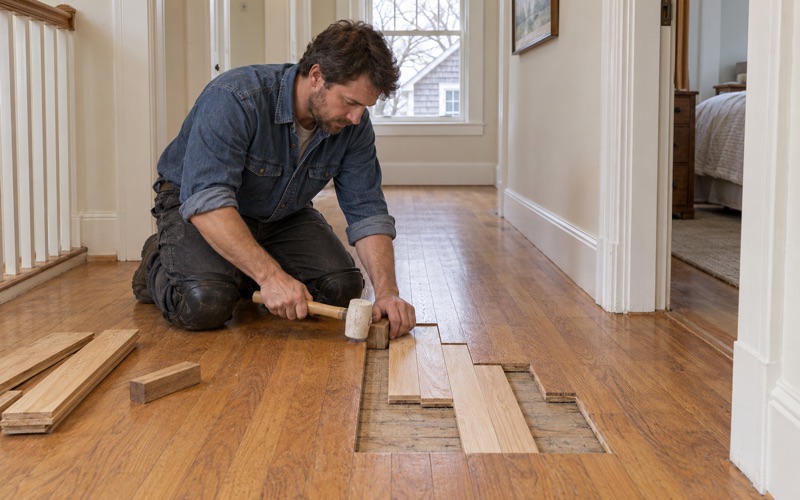
If enough wood is left, a sanding and a site-finished coat can make an old floor look new for far less than replacement. If it is thin, a screen and recoat may freshen the finish without cutting into the wood, or boards in the worst traffic lanes may need weaving out. Knowing which before closing turns a guess into a line item.
Stains, Gaps and Old Patches
Dark rings where a radiator once stood, gray water stains at a kitchen edge and pet urine stains that have soaked into the grain often do not sand out. Rug shadow and sun fade usually do. We point out which marks sit in the finish and which sit in the wood, because only the first kind disappears with sanding.
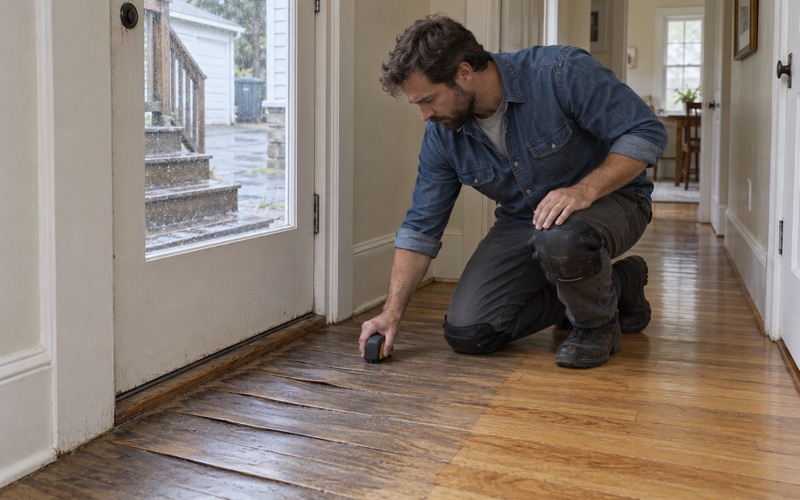
Board gapping that opens in winter and closes in summer is normal seasonal movement in older strip floors. Cupping, crowning or buckling is different, because it points to moisture coming from somewhere, and in a multi-unit building the source can be a neighbor’s pipe as easily as your own. Patches where a wall came down or a radiator pipe came out deserve a look too.
What Carpet and Tile May Be Hiding
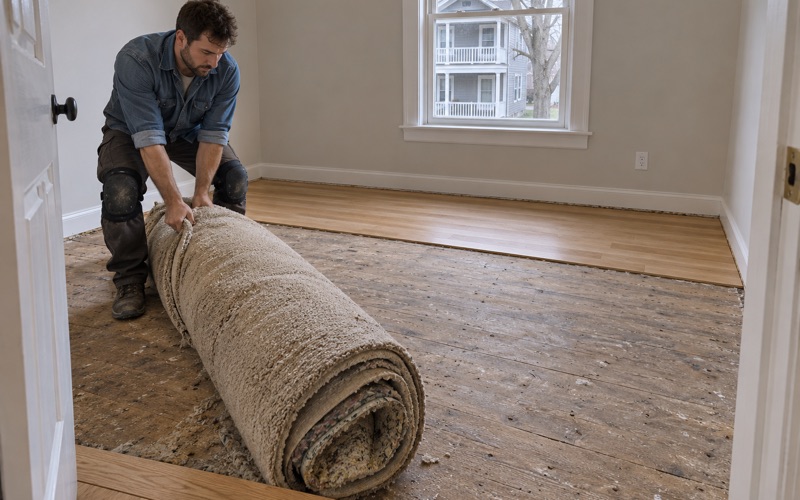
Wall-to-wall carpet in an older condo can sit over intact hardwood, over a damaged floor, or over plywood that was never meant to show. Lifting a corner inside a closet, with the seller’s permission, tells you a lot. Tack strip holes and carpet pad staples are easy repairs, while missing boards and crude fills are not.
Old resilient floor tile in a kitchen or hall may sit on black mastic, and that combination should be identified before anyone sands or scrapes it. We stop and refer it to the right trade rather than disturb it. Signs of powderpost beetle or old house borer, such as small exit holes and fine frass, are also worth noting before closing.
Association Rules on Floors and Underlayment
Chelsea is the smallest city in Massachusetts by land area and the third-most-densely populated, and in a condo building that density shows up underfoot, because someone usually lives below your floor. That is why associations write rules about floors, and why a new owner should read them before choosing materials.
Where the Rules Live
Massachusetts condominiums are organized under M.G.L. c.183A, and the rules a buyer inherits are usually found in the master deed, the bylaws and any rules and regulations the board has adopted. Floor provisions vary widely from building to building. Some say nothing, some require approval before work starts, and some address the layers beneath a new floor.
Ask for those documents during the purchase, not after the first contractor visit. We read the floor sections with owners and note what the building asks for, such as written approval, insurance certificates, permitted work hours or a particular type of underlayment. We do not assume a requirement the documents do not state, and neither should a buyer.
Replacing Carpet With Wood
The most common conflict we see is a buyer who wants to pull carpet and put down wood. In some buildings carpet was part of how sound was controlled between floors, and the association may ask what goes beneath any hard surface that replaces it. The answer shapes the product choice, the floor height at thresholds and the cost.
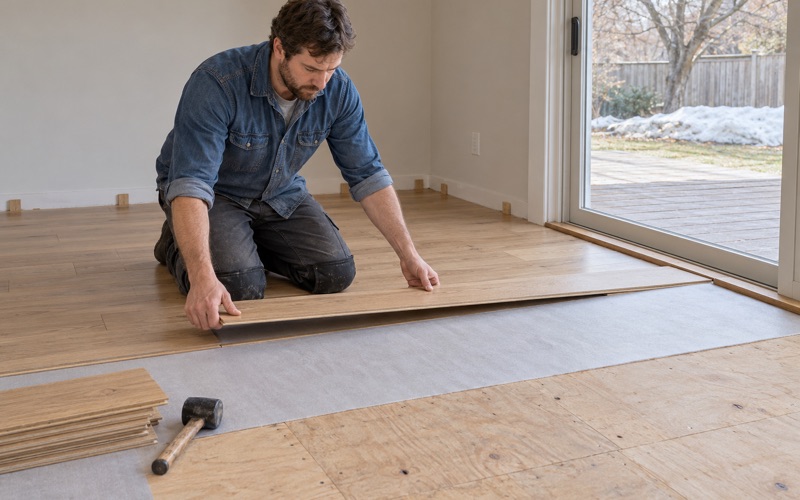
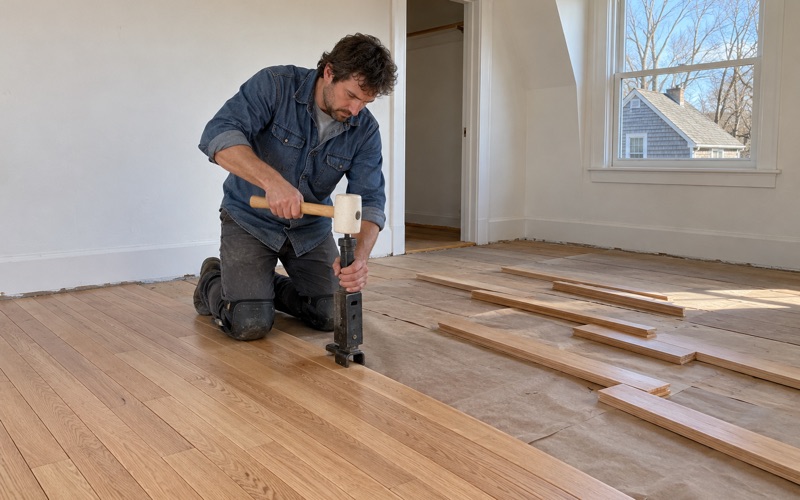
If an association asks for an acoustic underlayment, that often points toward a floating or glued engineered floor rather than nailed solid hardwood, and it can raise the finished height enough to need a reducer at a doorway. We price those details into the first quote, so approval from the board does not arrive alongside a surprise.
Working Inside a Shared Building
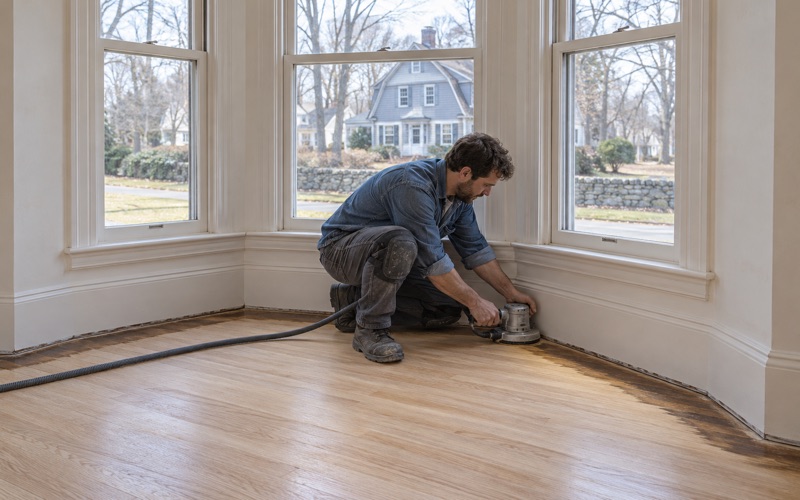
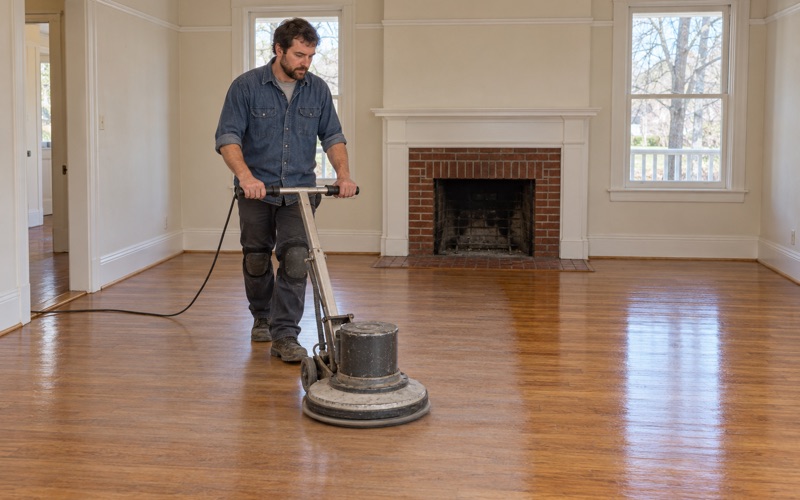
Sanding a unit in a multi-family building means neighbors hear the drum sander and share the hallways. We use dustless sanding with a HEPA vacuum, keep the grit sequence moving so loud days stay few, and work within whatever hours the association sets. In a unit built before 1978, we check the build year and any painted surfaces first, because Massachusetts runs its own lead-safe renovation rules.
Finish choice affects neighbors as well. Waterborne polyurethane has a lighter odor and a shorter dry time than oil-modified polyurethane, which helps in a building with shared stairways and air. We choose products that meet the Massachusetts VOC limits for wood coatings, which are stricter than the federal ones.
Planning Floor Work for a Five-Year Stay
The city’s loan is built around a five-year horizon, and that is a useful planning frame for floors too. A buyer who expects to own and live in the unit for at least five years can sequence the work rather than trying to finish everything before the moving truck arrives.
Before Move-In
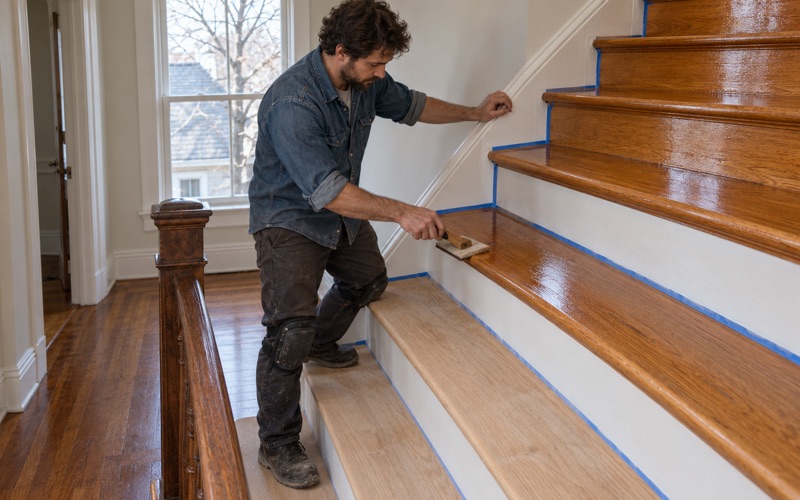
An empty unit is the cheapest time to sand. Furniture does not have to move, the finish can cure without foot traffic, and stair treads, thresholds and quarter round can be handled in one visit. If the budget only stretches to one room, we usually suggest the main living area, where traffic lanes and sun fade show first.
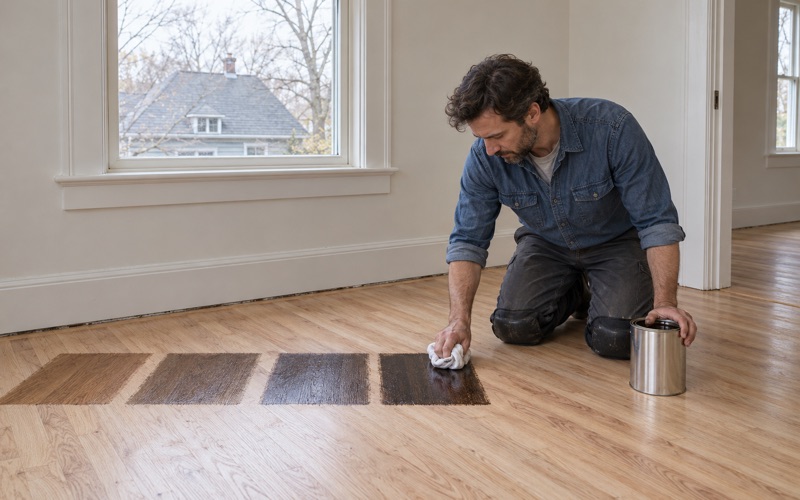
Stain is the other early decision. Orange oak from an older finish often surprises owners once it is sanded, so we lay stain samples on your own floor, in your own light, before a color is chosen. Wax residue left by decades of cleaning products gets tested and removed first, or the new finish will not bond.
Living With the Floor
For the years after, think in recoats rather than full sandings. A well-kept floor can be screened and recoated before wear reaches the wood, which saves the remaining thickness for later and keeps the cost low. Felt pads, a mat at the entry and prompt cleanup of spills do most of the work between visits.
If water ever comes through the ceiling from a unit above, we trace it, dry it and read the boards with a moisture meter before any board is replaced. We also document water-damaged floors room by room for the adjuster, so the claim reflects what was actually lost rather than what was easy to photograph.
If Plans Change
Life does not always follow a five-year plan. Under the program page’s terms, selling the home or converting it to a rental within five years means repaying a portion of the loan, so floor work that adds lasting value, such as refinishing over replacing, tends to hold up better than a costly custom choice that suits only one owner.
Our advice for a first Chelsea condo is steady rather than ambitious: keep the original wood where it can be saved, solve the problem the association cares about, and leave enough wood for the next sanding. A floor handled that way serves the five years the loan asks for and whatever comes after.
- 20+ Years on Wood Floors
- Stairs Quoted Tread by Tread
- Lead Checks Before Sanding