Newton Wood Flooring brings more than 20 years of work to wood-flooring in Everett, and a large share of our jobs here are for owners who live on one floor of a house and rent out the others. That owner pays for a floor twice when the first job fails, once in materials and again in an empty unit. We plan every job around doing it once.
For a small landlord the question is rarely whether the floor looks tired. It is whether the boards can take another sanding, which finish will survive the next tenant’s furniture and boots, and how to schedule the work so the unit sits empty for as short a time as possible. We answer those questions before we write a quote.
Before any sander comes off the truck, we check how much wood is left above the tongue, test for old wax and confirm the build year. Then we put a refinish price and a replacement price side by side, so the decision rests on numbers from your own floor rather than on a guess about what is under the carpet.
Everett’s Housing Plan and Its Small Landlords
Everett’s own housing plan describes the kind of building we work in most often here. It is worth knowing what the plan says, and what it does not yet do, before you set a budget for a floor.
What the 2023 plan counts
The 2023 Housing Production Plan, prepared with the Metropolitan Area Planning Council, counts 26 percent of Everett’s homes as single family, 56 percent in two-to-four-unit buildings and 17 percent in buildings of five or more units, using ACS 2018-2022 figures. The typical home in the city is a unit in a small multifamily, not a detached house.
The plan calls this a significant supply of middle housing and adds that much of this stock is aging. Newer census estimates point the same way: 10,035 of 18,827 units, or 53.3 percent, were built in 1939 or earlier. Those are the floors we see most, strip oak and pine that may already have been sanded more than once.
Owner-landlords on the other floor
Census estimates count 2,046 owner households living in two-unit buildings in Everett. That is a large group of people who are both landlord and neighbor, sharing a staircase, a basement and a heating system with their tenants. Their floor budget comes out of rent, and their tenant hears every pass of the sander.
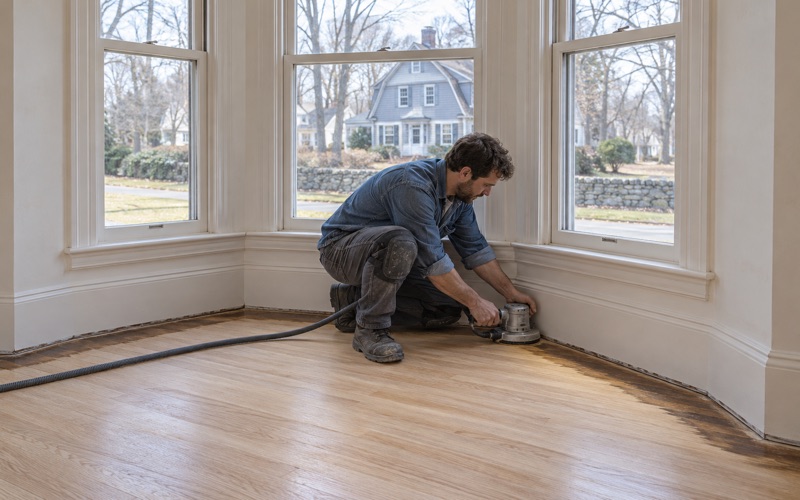
We work owner-occupied two-families one floor at a time, so the household upstairs or downstairs keeps living in the house while we finish the other unit. Dust is controlled with dustless sanding and a HEPA vacuum, and we walk through the schedule with you before anyone tells the tenant a date.
The proposed Good Landlord incentive
Strategy 3.1 of the plan proposes a Good Landlord incentive policy that would reward actions like keeping rents below market with property tax relief or other incentives. The plan gives its reason plainly: ‘Everett has many smaller landlords who may need additional incentives to keep rents low.’ It points to a 2023 state provision that lets a municipality set its own terms for that kind of relief.
The plan’s proposal is not yet a program. Housing production plans must go before the Planning Board and City Council, and we have not seen that step established for this one, so no incentive belongs in a floor budget today. What the proposal does show is that the city recognizes how thin a small landlord’s margin can be.
Looking for wood-flooring closer to Boston? See Wood-Flooring in Boston.
Floors in an Aging Two- or Three-Family Rental
An older Everett two- or three-family usually carries more than one generation of flooring decisions. Each unit can tell a different story, so we read every unit separately before we price the building as a whole.
What turns up under the carpet
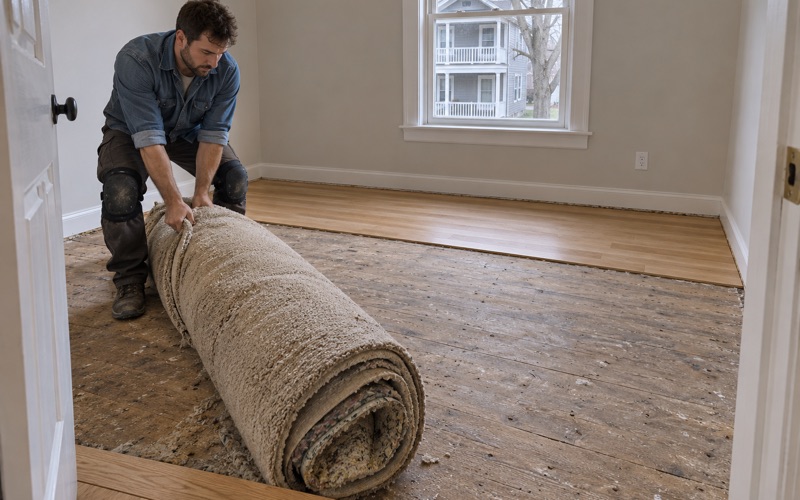
Pulling carpet in a rental unit often uncovers red oak strip flooring or eastern white pine, with tack strip nailed around the edges and a carpet pad that has stuck to the boards in places. Kitchens and baths may hold resilient floor tile, sometimes with black mastic beneath it.
We identify old tile and the black mastic under it rather than disturbing it, and if it needs another trade we stop until they have handled it. For any home built before 1978 we also check the build year and painted surfaces before sanding, because Massachusetts runs its own lead-safe renovation rules for that work.
Wear patterns that tell a tenancy’s story
Rental floors show exactly where people lived. Traffic lanes run from the entry to the kitchen, rug shadow and sun fade outline where furniture sat, and pet urine stains darken the boards near doors and corners. Water stains around radiators and under sinks are common in older units as well.
Some of that sands out and some does not. Surface wear and fade usually come up with a full sanding, while deep pet urine stains and dark water stains often go through the board. We mark those boards before quoting, so a weave-in repair is already in the price instead of appearing halfway through the job.
Patches left by old renovations
Older multifamilies have been reworked many times over. A wall that came down between two rooms, an outlet that moved, or a steam radiator and its pipes taken out can each leave a gap or a mismatched strip in the floor.
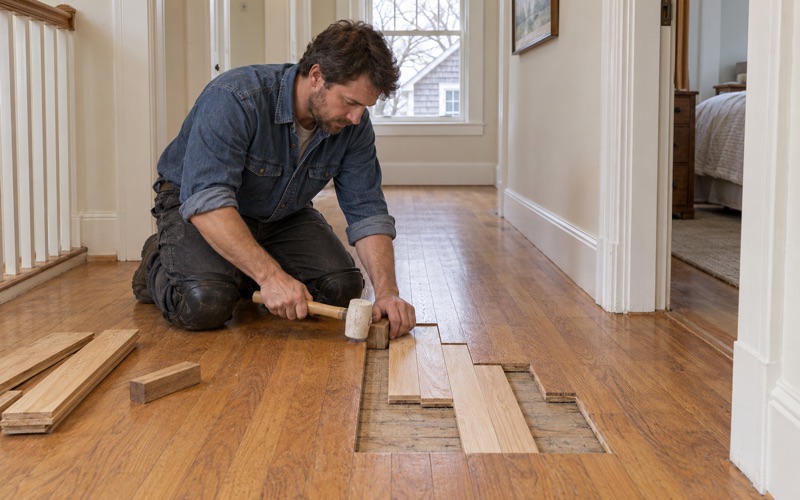
We patch those spots with matching boards woven into the existing floor rather than filling them, so the repair reads as floor instead of a scar. In a rental that matters twice: a visible patch dates the unit in listing photos, and a filled patch tends to crack and loosen under heavy traffic.
Refinish or Replace on a Landlord’s Budget
Many owner-landlords come to us expecting to replace and leave surprised that refinishing was an option. Plenty of older floors still have service left in them, but not all of them do, and the difference can be measured rather than guessed.
How much wood is left
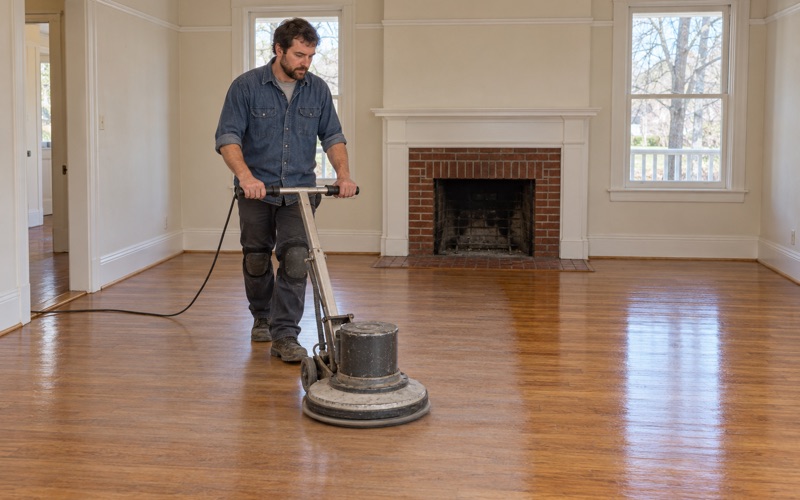
Solid hardwood can only be sanded so many times before the drum sander reaches the tongue and the boards start to split or show nails. We check how much wood is left above the tongue before promising a full sanding, usually by lifting a floor register or a threshold to see a board edge.
If there is enough, refinishing is almost always the cheaper way to put a unit back in service. If there is not, a screen and recoat can buy time on a floor whose finish is worn but whose wood is intact, and replacement can wait for a vacancy when the budget allows it.
When replacement is the right call
Replacement makes sense when boards are cupping, crowning or buckling from a moisture problem, when the wood is too thin to sand again, or when insects have been at work. Powderpost beetle and old house borer leave small exit holes and powdery frass, and we look for both before any decision.
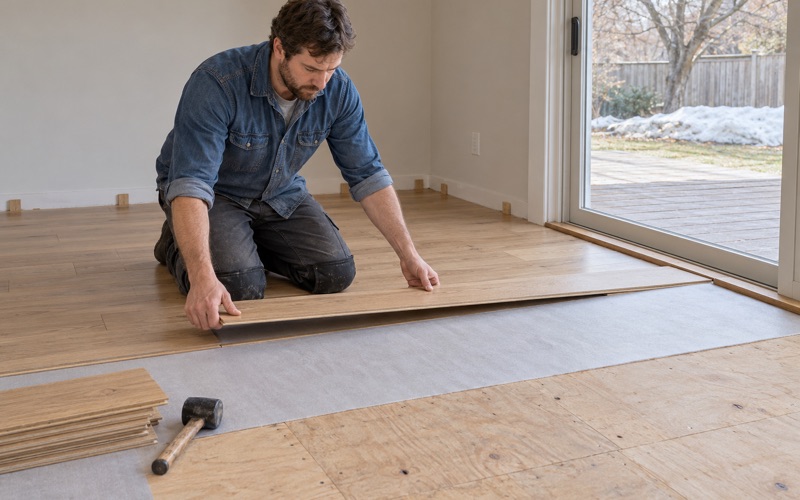
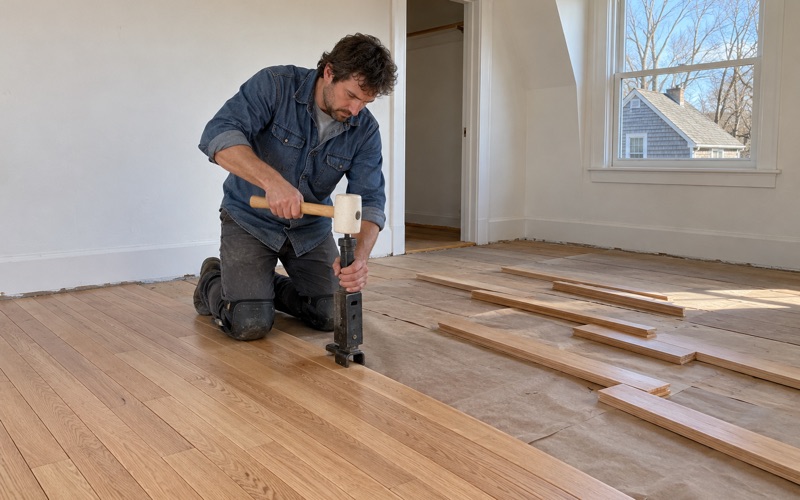
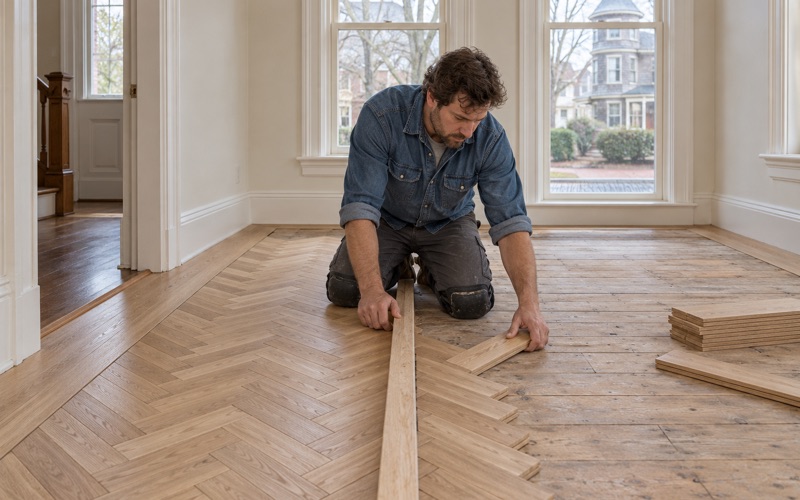
When we do replace, we check the subfloor and joists, allow for acclimation and leave the proper expansion gap. Prefinished flooring shortens downtime in an occupied building, while site-finished boards can match the oak in the rest of the unit. We price both so you can weigh speed against a seamless match.
Spending once on a turnover deadline
A small landlord’s floor money is usually spent between tenants, against a move-in date. The cheapest job on paper often costs more when the finish peels within a year or a patch has to be redone. We test for wax residue and cleaning-product buildup first, so the new coat bonds instead of lifting.
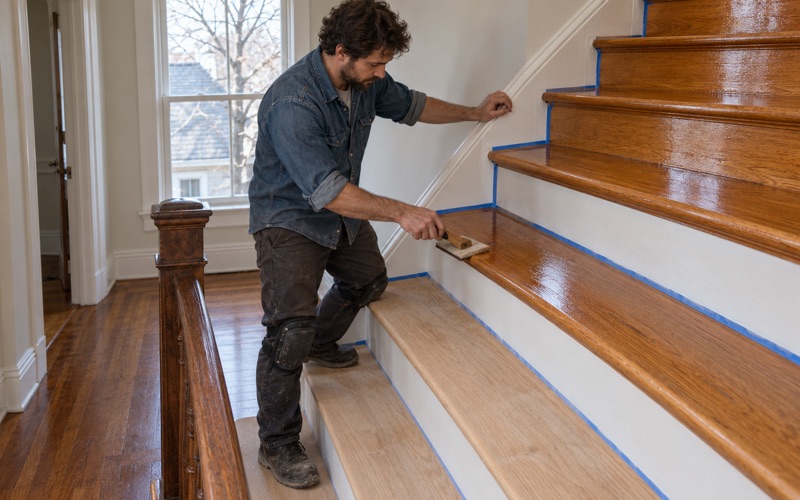
We also schedule around the rest of a turnover. Painters, plumbers and appliance installers can undo a fresh floor in an afternoon, so we sequence the floor late where we can and protect it until the unit is handed over. Shared stairs are quoted tread by tread, since a staircase is not priced by the square foot.
Finishes That Hold Up Through Tenancies
The finish is what a tenant actually walks on, and it is the part a landlord pays to redo. Choosing it for the rental rather than for a showroom is how a floor lasts through several leases.
Choosing the finish
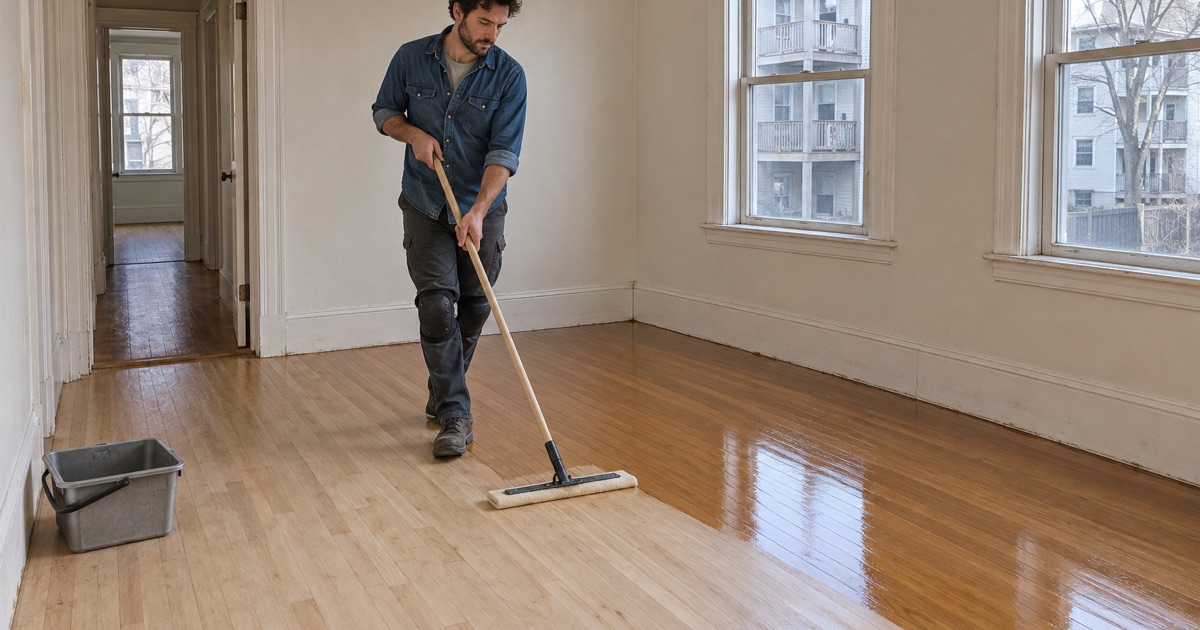
Waterborne polyurethane dries fast, stays clear and has a lower odor, which helps when a family lives on the other floor. Oil-modified polyurethane ambers with age and cures more slowly but builds a heavy film. Hardwax oil is easy to spot-repair but asks more of whoever maintains it, and in a rental that is rarely the tenant.
Every finish we apply fits the Massachusetts VOC limits for wood coatings, which are stricter than the federal ones. For most Everett rentals we lean toward a durable waterborne system, because it lets the unit return to service sooner and takes a clean recoat at the next turnover.
Sheen, color and the next recoat
A lower sheen level hides scratches and traffic wear far better than gloss, which matters when you cannot control who drags furniture across the floor. Neutral colors also age better than a fashionable dark stain, which shows every scratch and every line of dust.
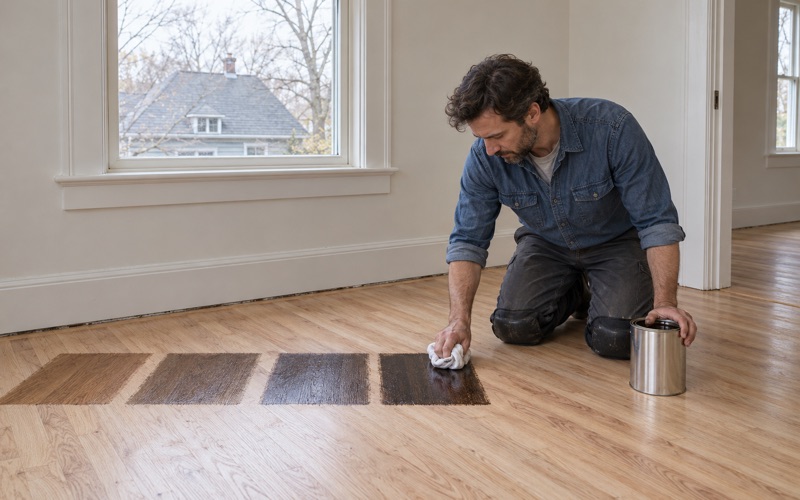
We lay stain samples on your own boards so you can judge them in the unit’s light before choosing. A floor kept on a regular screen and recoat schedule between tenants can go much longer before it needs another full sanding, which protects the wood still left above the tongue.
Seasonal movement and water in a heated building
Steam heat and New England winters dry the air inside older buildings, and the wood responds. Winter gaps open between boards during the heating season and close again in the humid months, so we explain board gapping to owners before they read it as a defect or hear it as a tenant complaint.
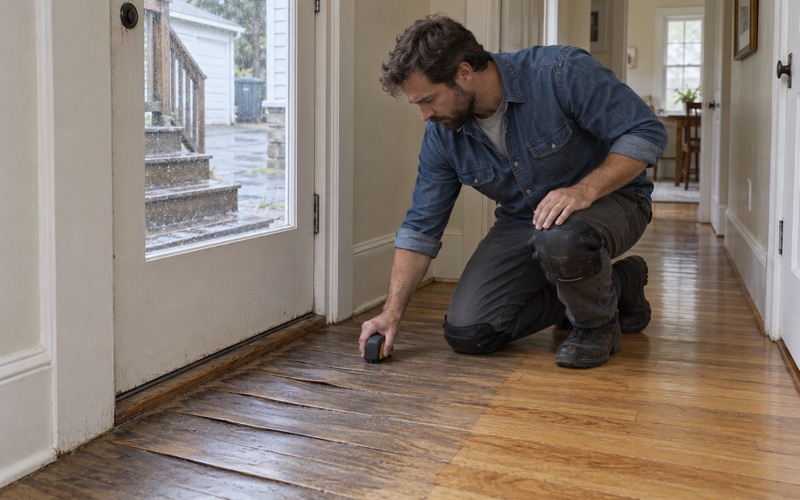
When a pipe bursts or an appliance overflows, we trace the water, dry the floor and read it with a moisture meter before any board is replaced. We document the damage room by room for the adjuster, which helps an owner who has to answer to an insurer and a tenant at the same time.
- 20+ Years on Wood Floors
- Stairs Quoted Tread by Tread
- Lead Checks Before Sanding