Newton Wood Flooring takes on wood-flooring in Lexington mostly for owners who plan to stay put, and after more than 20 years in the trade we have learned that the floor in a long-held house usually has plenty of life left. What those owners want is rarely a new floor. They want the existing one sanded back, tightened where it moves and made easier to walk across for years to come.
That shapes how we quote. We check how much wood remains above the tongue before promising a full sanding, we look for loose boards and uneven doorways while we are measuring, and we talk through which rooms you need to keep using while the work happens. A plan that empties the whole house for two weeks is not one most of our clients here can use.
This page covers the work we do most often in town: refinishing instead of replacing, repairing loose boards and awkward transitions, and phasing a project so the household can stay in residence. It also explains what we check first in older houses, because the age of the building changes the rules before a sander is ever switched on.
Floors for Lexington Owners Who Are Staying
The people who call us from Lexington are, more often than not, well settled. That is not a guess on our part; the census figures for owner households in town make it plain. They also explain why our quotes here lean toward repair and refinishing rather than tear-out and replacement, and why a good floor project looks different in this town.
Who owns the houses in town
In ACS 2024 5-year data (table B25007), 53.0 percent of Lexington’s 10,042 owner householders are 55 or older, and 32.5 percent are 65 or older. Another 1,302, or 13.0 percent, are 75 or older. At the other end, only 156 owner householders, 1.6 percent, are under 35, which leaves very few young buyers arriving to gut a kitchen and start over.
Ownership itself runs high as well. About 80.5 percent of the town’s occupied homes are owner-occupied, and 86.7 percent of owner households live in detached houses. In practice that means we spend most of our time in single-family homes where one household has walked the same hallways, stairs and kitchen floor for decades, and the wear pattern shows it.
Aging in place as a town priority
The Town of Lexington has treated this as a planning matter, not just a statistic. Its Department of Human Services commissioned ‘Lexington for All Ages: A Community Needs Assessment’ from the UMass Boston Center for Social & Demographic Research on Aging, published in November 2019. The initiative is meant to ensure that Lexington is and remains a place where older adults can comfortably and safely age in place.
The assessment surveyed residents 50 and older and drew 1,053 responses. We are a flooring company, not a planner or a remodeler, and our part is narrower. It is keeping the wood floors in a house people intend to stay in sound, smooth, quiet underfoot and finished in a way that lasts through the years they plan to spend there.
What that means for the work
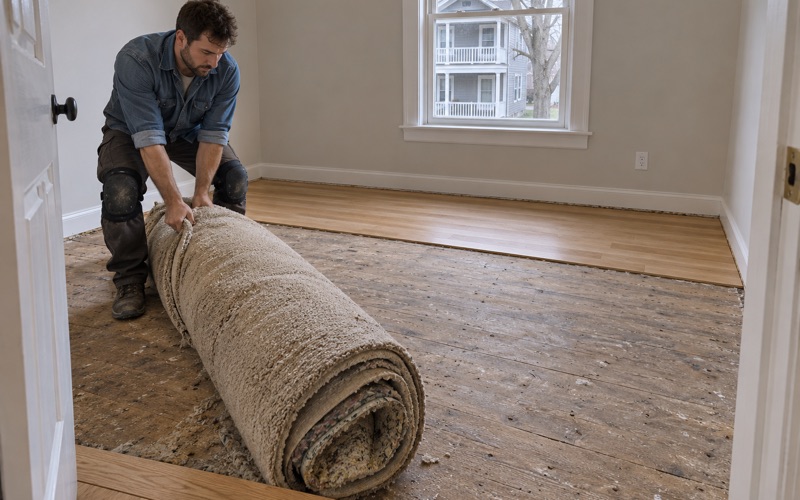
A long-held house tends to carry a familiar set of floor problems: traffic lanes worn gray between the kitchen and the family room, rug shadow where a carpet sat for twenty years, sun fade by the windows, a pet urine stain or two. Add boards that have started to squeak or lift, and you have the typical list. None of it usually calls for new flooring.
What it calls for is a careful look at what is there and how much sanding it can still take. That is the starting point for every Lexington quote we write, and it is why we often recommend a smaller job than the one the owner expected to pay for. A good refinish on sound wood usually carries a floor through the next decade of daily wear.
Looking for wood-flooring closer to Charlestown? See Wood-Flooring Services in Charlestown.
Refinishing Instead of Replacing a Long-Held Floor
Lexington’s housing is old enough that much of it sits on solid hardwood that was meant to be sanded more than once. Of the town’s 12,754 housing units, 43.2 percent were built before 1960 and 21.2 percent before 1940. Red oak strip flooring, maple and the occasional eastern white pine floor are what we expect to find when the rugs come up.
Checking the wood that is left
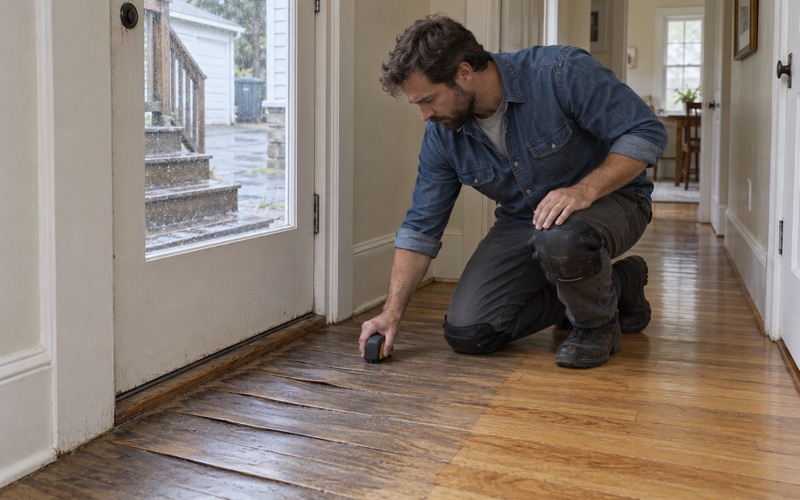
Before we promise a full sanding, we pull a floor register or a threshold and measure how much wood remains above the tongue. Floors that have been sanded several times can be thinner than they look, and a drum sander does not forgive a guess. If the margin is thin, we say so and plan a lighter cut instead.
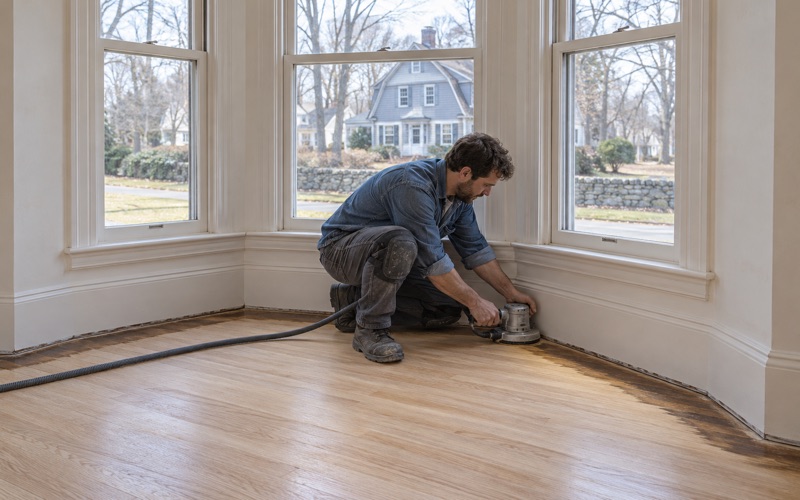
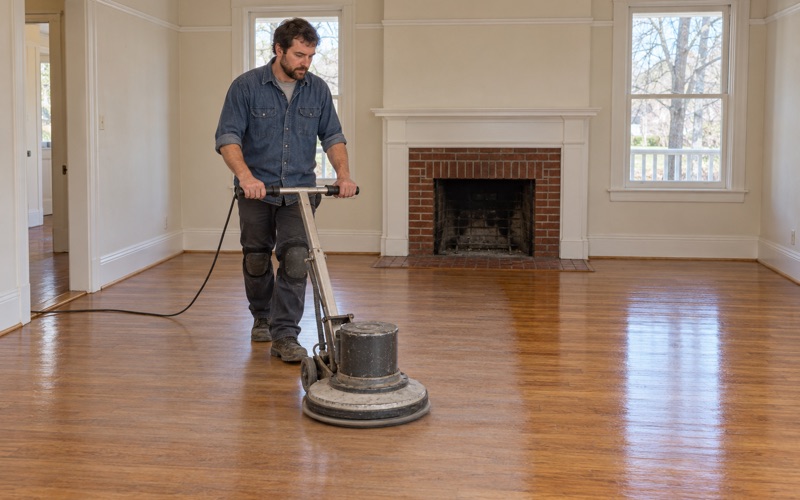
Where a full sanding is safe, we work through a measured grit sequence with dustless sanding and a HEPA vacuum, which matters in a house where someone is living a room or two away. Where it is not safe, a screen and recoat can refresh a sound finish without taking any real wood off the boards at all.
Old finishes, wax and residue
Floors in a house owned for decades have usually been cleaned with a long line of products. Wax residue, oil soaps and shine restorers all sit on the surface and stop a new coat from bonding, so we test for them and remove them before any finish goes down. Skipping that step is the usual reason a fresh coat peels within a season.
Some older floors also carry a shellac finish under layers of later coatings. We identify what is there before choosing a waterborne polyurethane, an oil-modified polyurethane or a hardwax oil, and every product we use fits the Massachusetts VOC limits for wood coatings, which are stricter than the federal ones. That matters more when the household is breathing the air while the finish cures.
Choosing a color you will live with
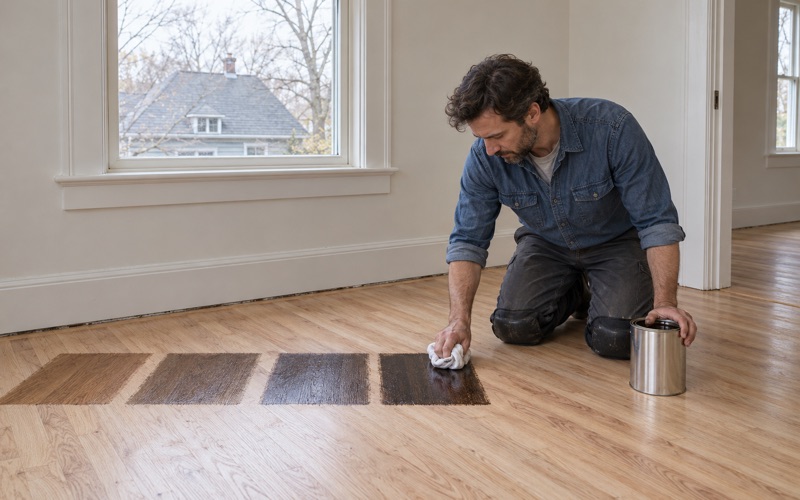
Owners who have looked at an orange oak floor for thirty years often want something calmer, but a sample in a showroom tells you little. We lay stain samples on your own boards, in your own light, so you can see them morning and evening before committing. Water popping before the stain goes on evens out how the color takes on older oak.
Sheen level deserves the same attention. A lower sheen hides the scuffs and traffic lanes that come back in a busy kitchen, and it reads softer in rooms with a lot of window glass. We talk through both choices at the walkthrough so nothing is decided in a hurry on the morning the finish goes down.
Loose Boards, Thresholds and Transitions
Many of the calls we get from Lexington start with something small: a board that moves underfoot, a threshold that has worked loose, a step up where one floor meets another. These are repair jobs, and in a house where the owners mean to stay, they are often the most useful work we do all year.
Securing boards that move or squeak
Boards loosen for ordinary reasons. Flooring cleats and cut nails back out over time, seasonal swings open winter gaps and close them again, and a joist that has dried and shrunk can leave a soft spot. We find where the movement is coming from before fixing it, because face-nailing a squeak without knowing why rarely holds.
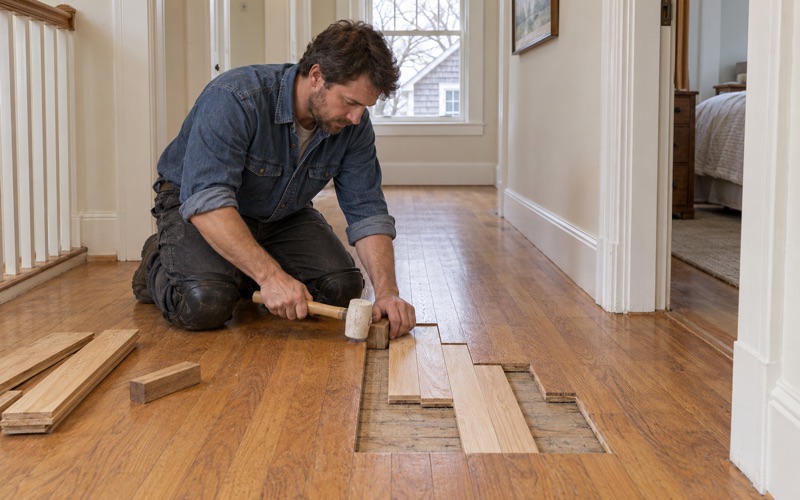
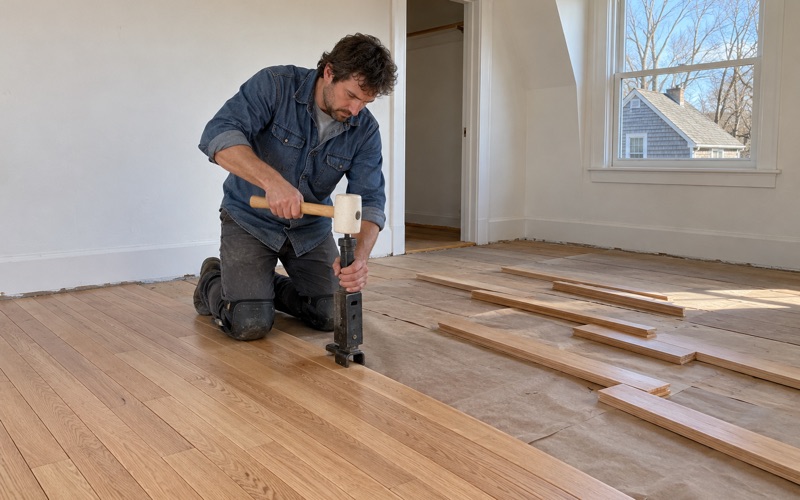
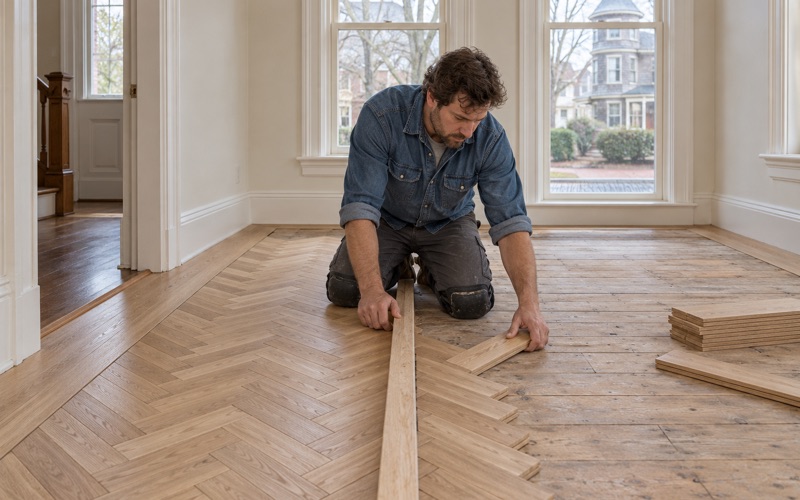
Where a board is cracked, cupped or crowning past saving, we do a board replacement or weave-in repair with matching stock rather than filling the gap. The same approach covers holes left where radiators and their pipes were removed, and patches where a wall came down, so the repair reads as floor and not as a scar.
Smoothing room-to-room transitions
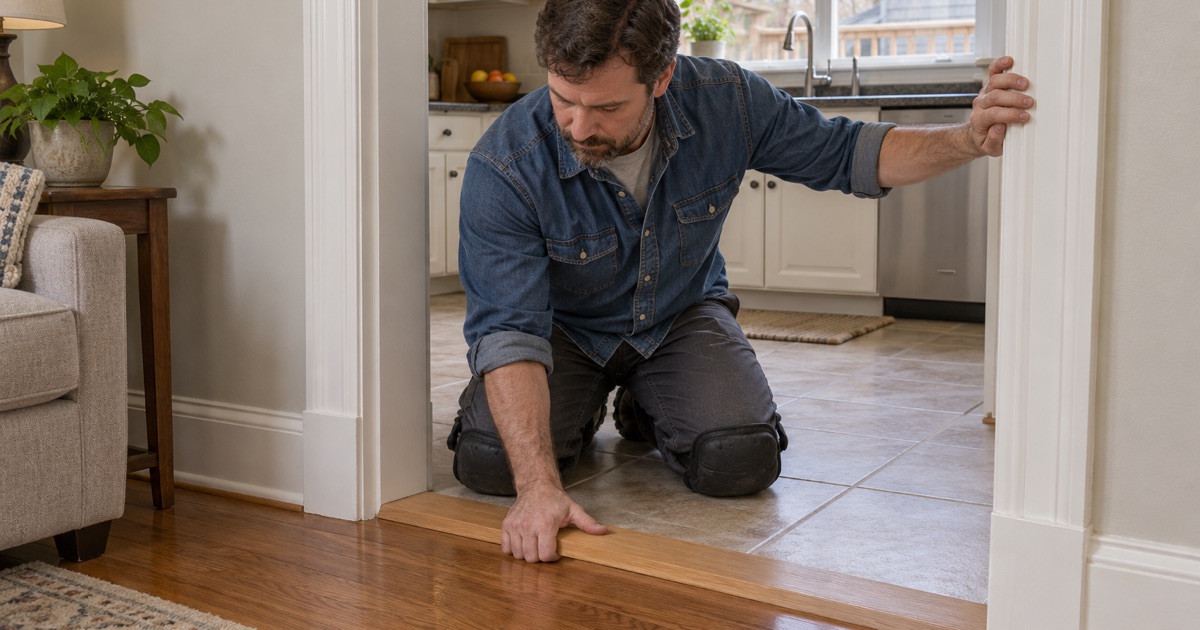
Transitions are where flooring from different decades meets. A kitchen redone in the 1990s may sit higher than the oak hallway beside it, or an old threshold may have been left in place when carpet came out. We can replace a worn threshold, fit a lower-profile reducer, or reset quarter round so the joint is tidy.
What we cannot do is promise to remove every height difference; that depends on the subfloor and what is stacked on it. We measure each doorway, tell you what is realistic, and quote the options separately so you can choose which ones are worth doing. Often the smallest change makes the biggest daily difference.
Stairs and edges that get daily use
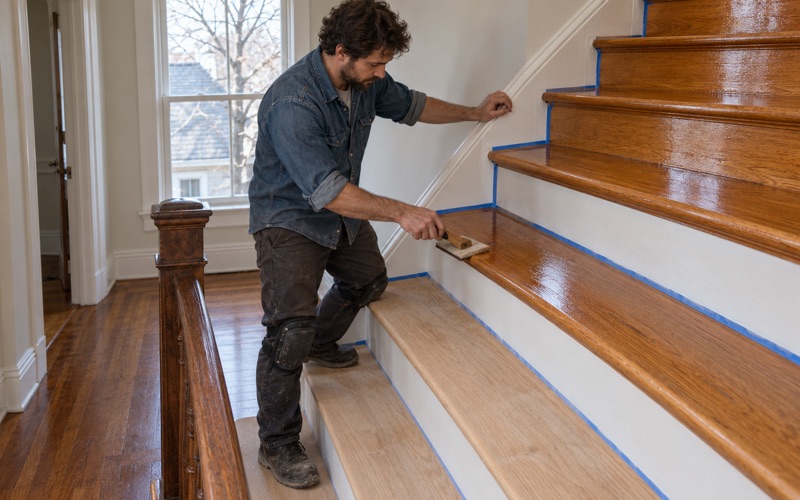
Stairs take more wear than any other wood surface in a house, and in a two-story home they are walked many times a day. We quote stair treads, stair risers and stair nosing tread by tread, because a staircase cannot honestly be priced by the square foot, and loose or worn nosings are repaired before any refinishing begins.
Treads are also where old finish wears through first, leaving bare wood at the center of each step. Refinishing them takes care to match the floor at the landing, and we schedule the stairs so the household always has a way up and down while the finish cures in stages.
Planning a Project While You Live at Home
Phasing is the part of a Lexington job we spend the most time on before work starts. Most owners we work with here are not moving out for a refinish, and they should not have to. The plan sets which rooms are done in what order, where people sleep and eat while it happens, and how long each finish needs before it can be walked on.
Working a few rooms at a time
We split the house into stages so a bedroom, a bathroom and a path to the kitchen stay usable throughout. Furniture is moved room by room, the active area is sealed off, and dustless sanding with HEPA extraction keeps the rest of the house livable. Waterborne finishes cure faster, which shortens the time any one room is closed.
The same thinking applies when a floor is part of a larger renovation. We schedule new or refinished floors around the other trades and protect them once they are done, so a painter or plumber does not undo a finish the household has been waiting on. Each stage is walked through with you before we move to the next.
Checking the house before sanding
Because so much of Lexington was built before 1978, we check the build year and any painted surfaces before sanding. Massachusetts runs its own lead-safe renovation rules for homes of that age, and painted baseboards, stair risers and old shoe molding all come into play. With residents at home, getting that right matters even more.
Old resilient floor tile and the black mastic under it turn up in kitchens and basements of this era too. When we find it, we identify it rather than disturb it, and the work in that area stops until the right trade has handled it. That can change a schedule, so we look for it at the first visit.
Moisture, water damage and lower levels
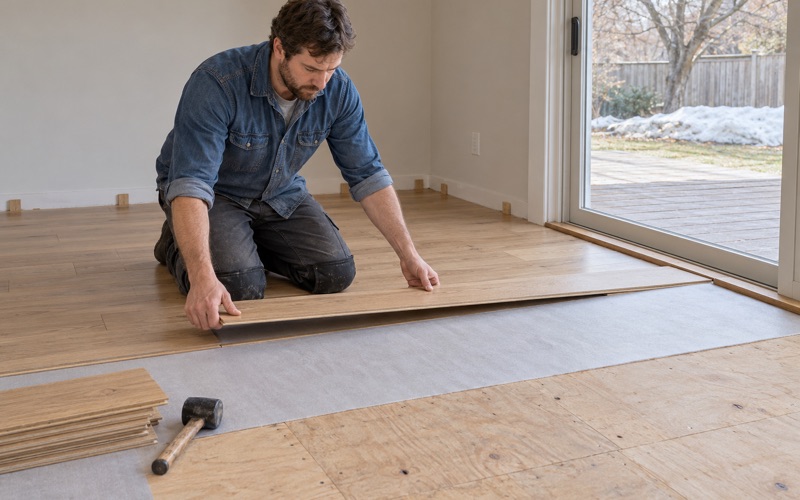
Lower-level rooms get used more as owners settle in, and they need a floor matched to the moisture actually measured there. We take moisture meter readings below grade and usually recommend engineered wood rather than solid hardwood, with a proper vapor retarder, acclimation time and expansion gap so the boards do not cup or buckle later.
When water does reach a floor, from a burst pipe, an overflowing appliance or a wet basement, we trace the source, dry the area and read it with a meter before replacing a single board. We document the damage room by room for the adjuster, which keeps the claim clear while you stay in the house.
- 20+ Years on Wood Floors
- Stairs Quoted Tread by Tread
- Lead Checks Before Sanding