Newton Wood Flooring has spent more than 20 years on wood flooring in Malden and the older homes around it, and a large share of our calls here come from owners getting ready to sell. They want the floors to look cared for in listing photos without starting a project that runs past the closing date or kicks up dust they cannot account for.
That planning is a little different in this city. Before a Malden house changes hands, the seller has a water line requirement to clear, and the house itself is often old enough that sanding has to follow the Massachusetts lead-safe rules. We help sellers put both of those on one calendar so the floor work lands in the right week.
This page walks through where refinishing fits in that pre-listing stretch, what lead-safe sanding means in a house built before 1978, and how we help a seller decide whether to refinish at all or leave the floors for the next owner. We start every job by looking at the boards themselves, because a plan only works if the wood can take it.
Malden’s Lead Water Lines and the Certificate at Sale
Most sellers we meet already know their floors need attention, but fewer have thought about the pipe that brings water into the house. In Malden that pipe matters to the sale, and it often shapes when the rest of the pre-listing work can start, so we ask about it before we set a sanding date.
A City That Started With Many Lead Lines
According to a Massachusetts Municipal Association account, the MWRA found in 2016 that Malden had the highest percentage of lead-lined service pipes in the state, about 47 percent of the city’s 11,682 service lines. MassDEP set a minimum of 150 full replacements a year, and the city reported replacing 273 in one year.
That backlog follows from how old much of the housing is. Census figures show 12,572 of Malden’s 27,876 housing units were built in 1939 or earlier, which is 45.1 percent of the stock. Houses of that age often still carry original oak, maple or pine floors, and many still carry an original water service as well.
What the Ordinance Asks of a Seller
The same account reports that Malden passed an ordinance requiring private water service pipes to be certified as lead-free before a property can be sold. The Malden Department of Engineering handles that lead-free water line certificate, so a seller should ask the department early what the house needs before it is listed.
For our purposes the certificate is a scheduling fact, not a flooring one. If the private side of the line still has to be replaced, that work belongs ahead of the refinish on the calendar. We would rather a seller learn the status of the line in the first week of planning than in the last week before showings.
Paying for the Line Work
The city has put outside money toward replacement. Mayor Gary Christenson allocated $2.75 million of American Rescue Plan Act funds to the effort, and in May 2024 the EPA announced a $1.4 million Bipartisan Infrastructure Law award that the mayor said would allow replacement of both the public and private sides of lead service lines.
The EPA release does not say that replacement costs nothing for every owner, so we do not tell sellers that either. What a given property qualifies for is a question for the city. Our part is making sure the floor budget and the floor schedule leave room for whatever that answer turns out to be.
Looking for wood-flooring closer to Winthrop Town? See Wood-Flooring Services in Winthrop Town.
Where Floor Refinishing Fits in a Pre-Listing Schedule
A pre-listing calendar has a fixed end point, the day photos are taken, and every trade has to finish before it. Floors are usually the last big job because nothing heavy should cross a fresh finish, so we plan backward from the photo date and fit the other work in front of ours.
Put the Water Line and Other Trades First
We ask sellers to finish the line replacement, painting, plumbing and electrical repairs before we sand. Crews carrying tools and ladders through a house will scratch a new finish, and a painter’s drop cloth dragged across a floor that has not fully cured can leave marks in it.
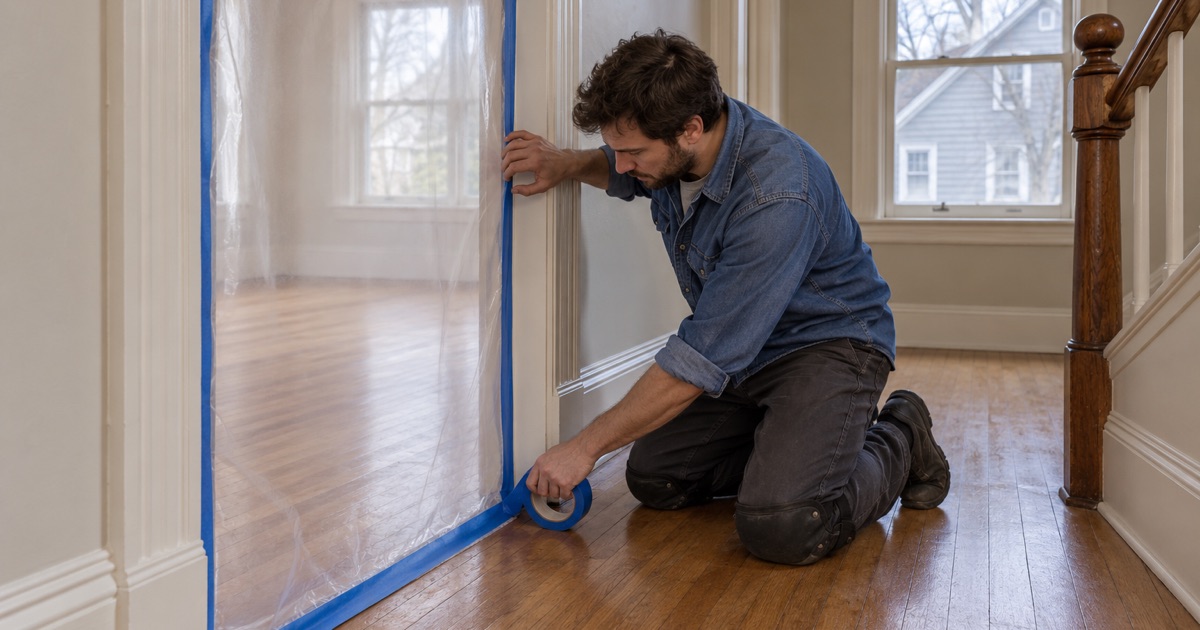
When another trade has to come back after us, we protect the floors with breathable covering and tape the edges so nothing slides. That is part of how we schedule new floors around a renovation in general, and it applies just as much when the renovation is a short sprint toward a listing.
How Long the Floors Take Out of the Calendar
A full sanding and refinish of a few rooms usually takes several working days, with the house off-limits while coats dry. Waterborne polyurethane lets a room be walked on in socks sooner than oil-modified polyurethane, and both need more time before furniture and rugs go back down.
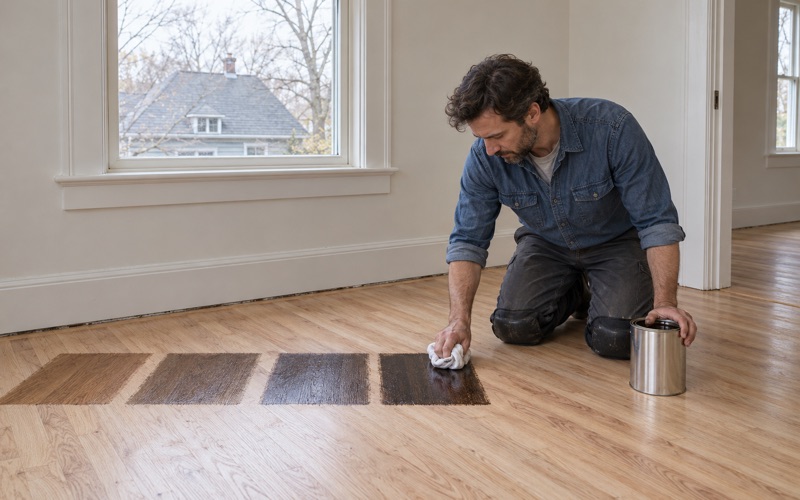
We pick finishes that meet the Massachusetts VOC limits for wood coatings, which are stricter than the federal ones, and that also helps with timing because the house airs out faster. Stain samples go down on the seller’s own boards, in their own light, so the color decision does not hold up the schedule.
Owner-Occupied Two-Families
Two-unit buildings make up 5,987 of the city’s housing units, and some sellers live in one unit while preparing the other or the whole building for sale. We can work one floor at a time so the household upstairs or downstairs keeps living in the house.
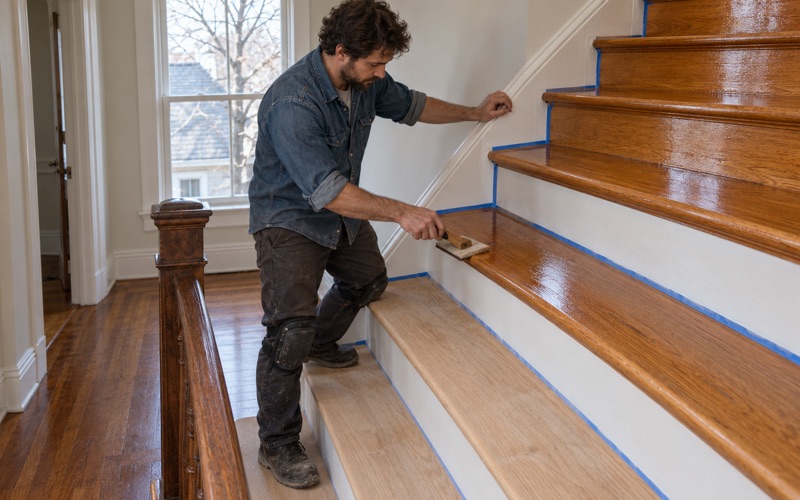
Working floor by floor stretches the calendar a little, so we build it into the plan from the start rather than discovering it in the middle. Shared halls and stairs get sequenced last, since stair treads, risers and nosing are quoted tread by tread and need their own drying window.
Lead-Safe Sanding in a Pre-1978 Malden House
With 45.1 percent of Malden’s homes built before 1940, a seller is likely to be living in a house that predates the federal lead paint ban. Floor sanding near painted baseboards, door casings and stair parts can disturb old paint, so we treat build year as the first question on any job here.
Checking the Build Year and Painted Surfaces
Before we quote a sanding job, we confirm when the house was built and look at what is painted near the floor. Quarter round, baseboards and stair risers in older homes were often painted many times, and some floors themselves carry old paint along the edges where a rug once covered the middle.
Massachusetts runs its own lead-safe renovation rules for homes built before 1978, layered alongside the EPA RRP Rule. Knowing the age of the house tells us which practices apply, how the rooms need to be contained, and how cleanup has to be handled before a buyer ever walks through.
HEPA-Only Power Sanding Under 454 CMR 22
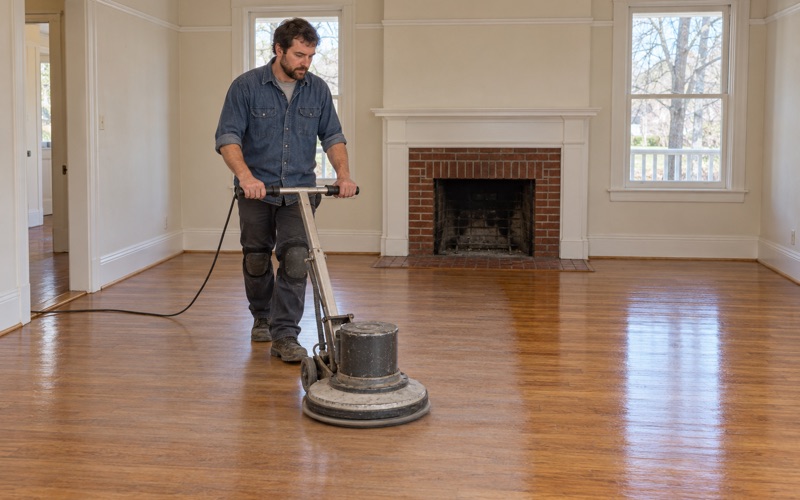
Under 454 CMR 22.00, power sanding of lead-painted surfaces is limited to equipment that runs through a HEPA vacuum. We run our drum sander and orbital sander with HEPA collection and work through the grit sequence so less dust is left in the air or on the sills.
Containment matters as much as the machines. We seal doorways, cover vents, and finish each day with HEPA vacuuming and wet cleaning. For a seller about to host open houses, that cleanup is part of what keeps the floor job from becoming a problem somebody else has to explain later.
Tile and Black Mastic Found During Prep
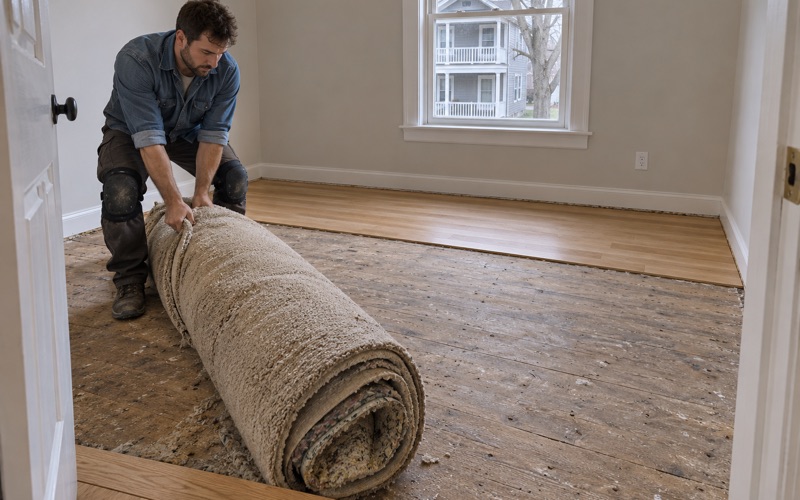
Prep in an older house sometimes turns up old resilient floor tile, or the black mastic left under it, beneath carpet or in a back hall. Those materials can contain asbestos, so we identify them and stop rather than sanding or scraping through.
When that happens, the right trade handles the tile and mastic before we come back. It can push the floor date back, which is one more reason we like to look under carpet pad and tack strip early in the pre-listing schedule instead of the week before photos.
Refinish Now or Leave It for the Buyer
Not every seller should refinish. Some floors are in good enough shape for a lighter treatment, some are too thin to sand again, and some buyers plan to change everything anyway. We give sellers an honest read of the boards and let them decide what fits their timeline and budget.
Reading How Much Wood Is Left
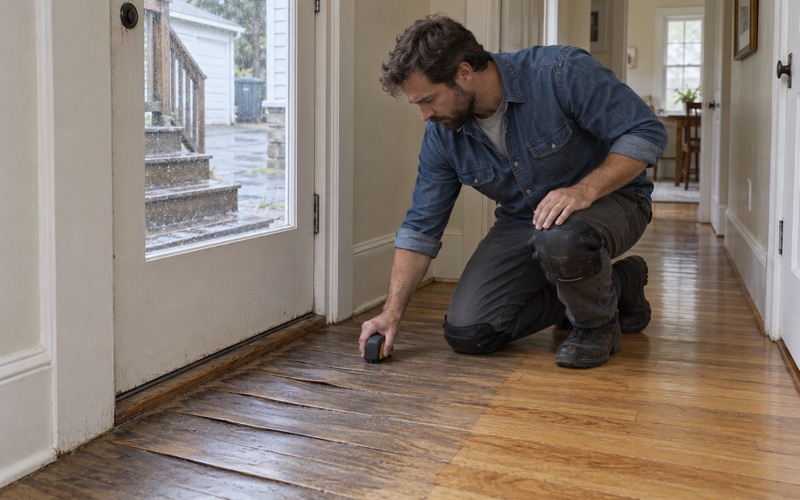
Old red oak strip flooring and eastern white pine can only be sanded so many times. We check how much wood remains above the tongue, often by pulling a register or looking at a threshold edge, before we promise a full sanding of tongue and groove boards.
If there is enough wood, a full sand can take out traffic lanes, water stains, pet urine stains and sun fade. If there is not, we say so, and we talk about board replacement or weave-in repair for the worst spots instead of pushing a sander through what is left.
When a Screen and Recoat Is Enough
A floor with a sound finish and only light surface wear may just need a screen and recoat. We lightly abrade the existing coat and lay down fresh polyurethane, which takes far less time than a full sanding and creates very little dust.
The catch is old wax residue or cleaning-product buildup, which can stop a new coat from bonding and make it peel. We test for those before recommending a recoat, and we remove them first when we find them, so the floor still looks right on the day of the first showing.
Patching Before a Sale Instead of Refinishing
Some sellers only need targeted repairs. Holes where a steam radiator and its pipes came out can be patched with matching boards woven into the floor, and a gap where a wall came down can be filled so the repair reads as floor rather than as a scar.
Other sellers prefer to leave the floors untouched and let a buyer choose the stain and sheen. We are glad to walk through the house, point out cupping, gapping or any frass and exit holes worth mentioning, and give the seller a clear picture of what the next owner would be taking on.
- 20+ Years on Wood Floors
- Stairs Quoted Tread by Tread
- Lead Checks Before Sanding