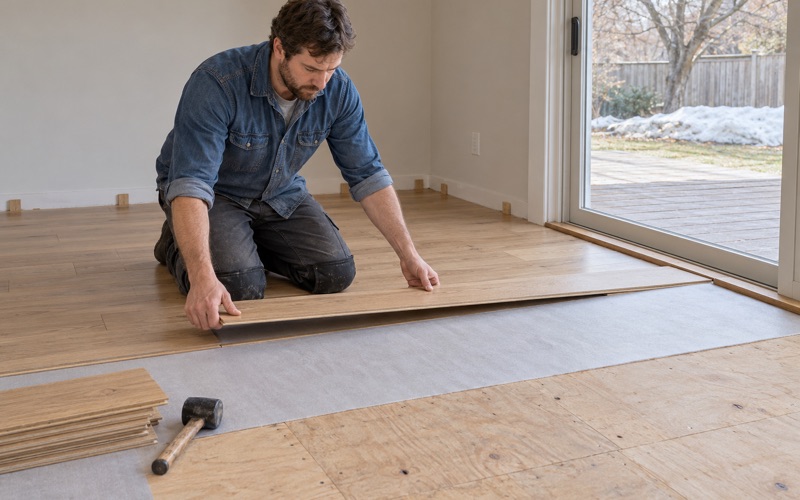
Newton Wood Flooring handles wood flooring in Medford with more than 20 years in the trade behind us, and much of what we do here comes down to timing. A large share of the floors we see sit in rented apartments that change hands on a yearly rhythm, so the job is often a refinish or repair that has to finish before the next set of keys is handed over.
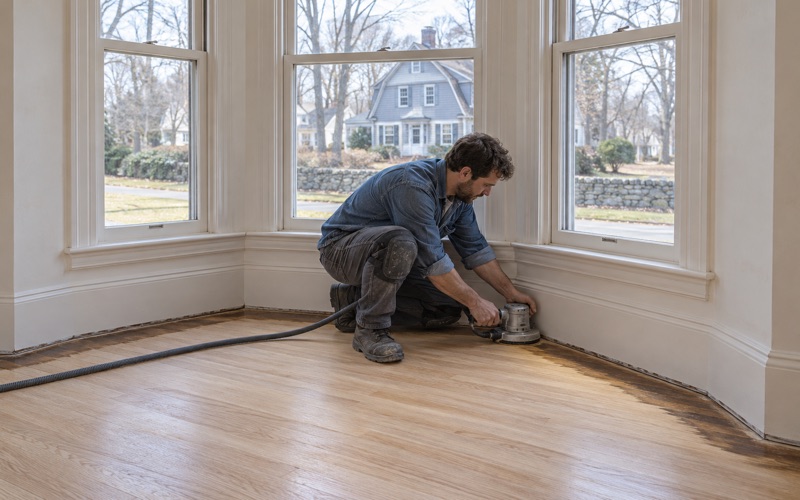
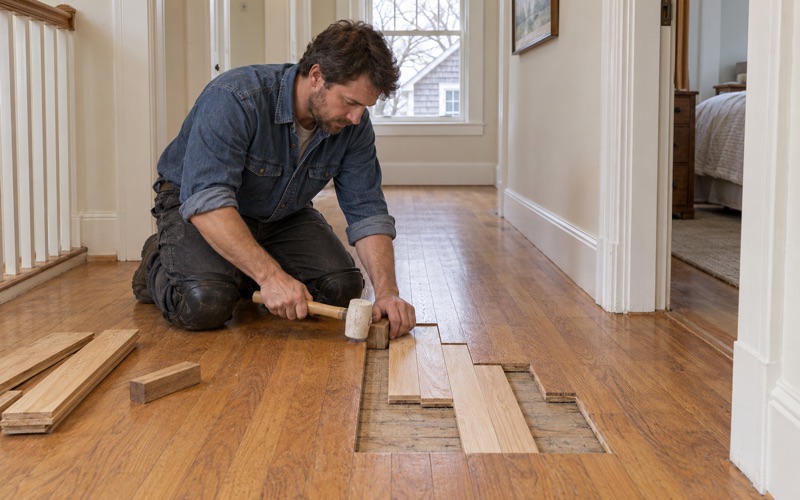
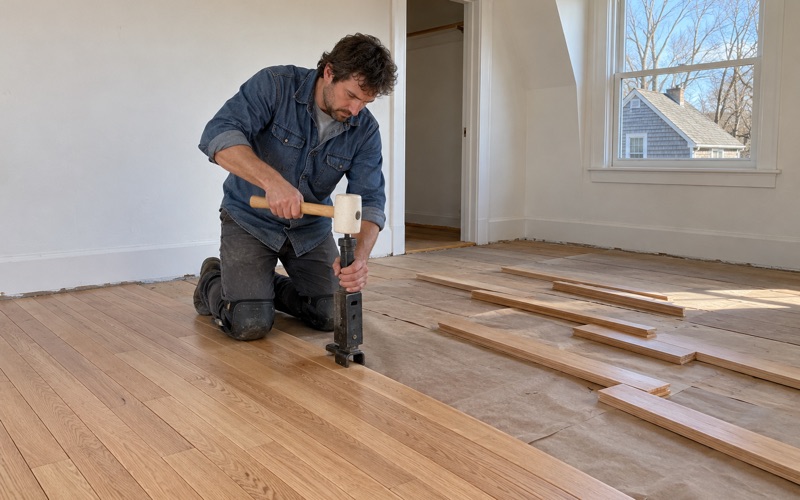
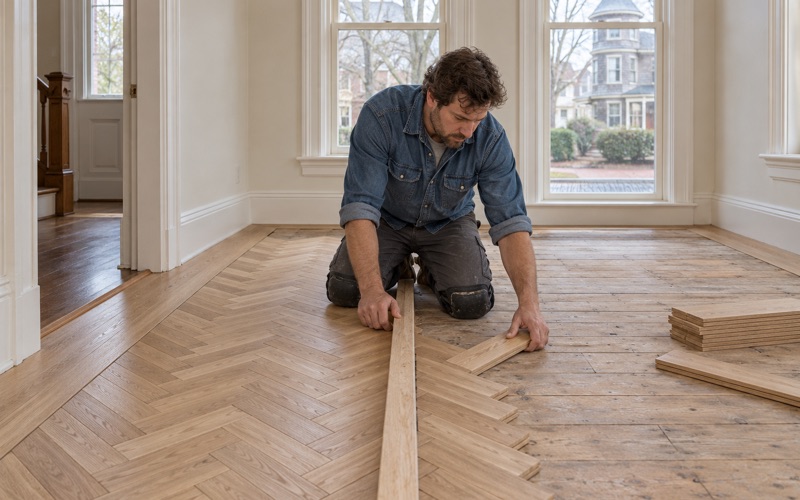
We sand and refinish original oak, maple and pine, weave in matching boards where a section is beyond saving, and run a screen and recoat when the finish is worn but the wood beneath it is sound. Before promising a full sanding on an older floor, we check how much wood is left above the tongue, because a floor sanded every few leases has less to give.
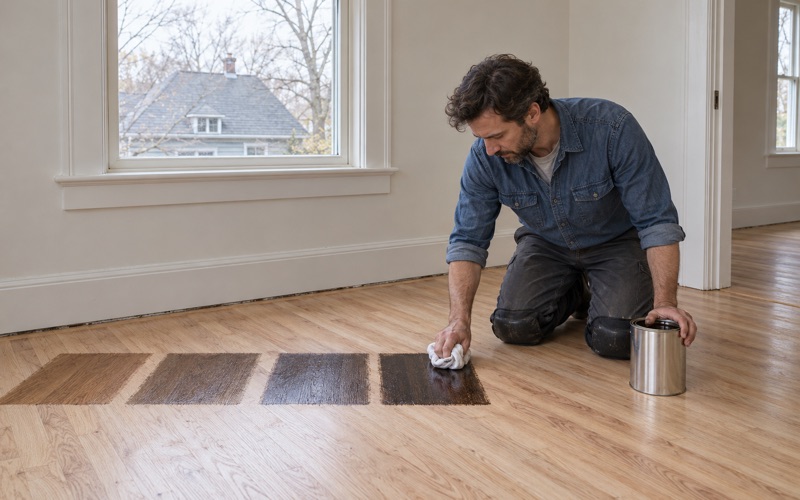
Owners who live in one half of a two-family and rent the other get a different plan: we work one floor at a time, so the household upstairs or downstairs keeps living in the house. Stain colors are chosen from samples laid on the actual floor, in the room’s own light, rather than from a printed chip or a photo on a phone.
Who Rents in Medford, and Where
Knowing who lives on a floor tells us how it will wear and when we can get to it. Medford’s rental market leans young, a lot of it sits in two-family houses rather than large complexes, and part of it follows the calendar of a university whose campus crosses the city line. Each of those shapes the work.
Young Renter Households
According to ACS 2024 5-year data, 45.9 percent of Medford’s occupied homes are rented. Within that renter group, 1,134 households, or 10.1 percent, are headed by someone aged 15 to 24, and 4,193, or 37.5 percent, by someone aged 25 to 34. An age band is not an occupation, and the census does not say how many of these renters are in school.
What the numbers do suggest is a market where leases are short and tenants move often. Apartments rented to younger households tend to see furniture dragged in and out every year, rolling desk chairs on bare wood, and fewer area rugs than an owner would put down. That pattern shows up on the boards long before anyone calls us about it.
Two-Family Flats Carry Much of the Renting
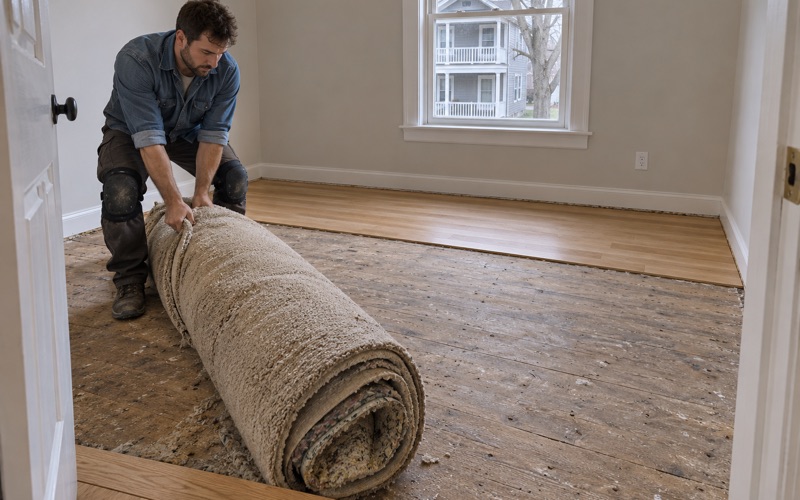
Of Medford’s 11,180 renter households, 4,000 live in two-unit buildings, more than live in buildings of fifty or more units. In East Medford, two-family houses became the main form of development in the late nineteenth century, and many of those flats still carry their original strip floors under the rugs and finish coats left by generations of tenants.
In a two-family, the floors on each level usually match in species and age, which makes matching boards for a weave-in repair easier to find. It also means sound and dust travel between units, so we run dustless sanding with a HEPA vacuum connected to the sander and seal the shared stairwell door before any work starts on either floor.
Tufts on the City Line
Tufts University’s campus sits on both sides of the Medford-Somerville border, and the university has said that most of its juniors and seniors compete with the public to rent houses. That is why many leases close to campus start and end around the academic year, and why the window for floor work in those apartments tends to fall in late spring and summer.
Looking for wood-flooring closer to Dorchester? See Wood-Flooring in Dorchester.
The 2017 Ordinance and What It Asks
Medford’s approach to off-campus housing is written into a city ordinance aimed at the university itself. It does not mention floors, but it shapes how many people share an apartment, and occupancy is one of the biggest factors in how fast a finish wears through to bare wood in a hall, a kitchen or a bedroom doorway.
What the Council Passed
On February 28, 2017, the Medford City Council unanimously passed the University and College Accountability ordinance, as the Tufts Daily reported that March. It requires Tufts to give the city a list of the addresses of students living off campus in Medford each semester. The list carries addresses rather than names, and it is renewed every term.
The purpose of the list is enforcement. With a semester-by-semester set of addresses in hand, the city can check whether a given property is being rented in line with its occupancy rules. For an owner renting near campus, that is a good reason to keep the lease, the bedroom count and the number of occupants aligned from the very first showing.
Three Unrelated Occupants
City ordinances prohibit more than three unrelated people from sharing a property, according to the City Clerk at the time. A unit rented within that rule still houses three adults with separate schedules, separate furniture and separate guests, which on a hallway or kitchen floor adds up to a lot of traffic compared with a single household.
From the floor’s point of view, three occupants means three desk chairs, three sets of shoes at the door and three people walking the same path from bedroom to kitchen. We see the result as traffic lanes worn gray down the middle of a hall while the boards along the baseboard still look nearly new.
Enforcement Runs on Complaints
In 2017 the city’s code enforcement officer said that all of Medford’s housing inspections are complaint-driven, with two officers handling them. Nobody from the city comes to look at a floor when a lease ends, so the condition of the boards between tenants is a matter between owner and renter, and the decision to refinish is the owner’s alone to make.
Wear Patterns in Shared Apartments
Rental floors fail in recognizable ways, and reading the damage correctly decides whether a unit needs a recoat, a repair or a full sanding. In shared apartments the wear is rarely even: it concentrates where people walk, sit and set things down, and it often hides under a rug until move-out day.
Traffic Lanes and Chair Wear
Worn finish shows first in doorways, the hall and the stretch in front of the kitchen counter. If the wear stops at the finish coat, a screen and recoat restores the surface without touching the wood. Once the lanes have gone to bare, graying wood, the floor needs sanding, because a fresh coat over raw fibers will not match the rest of the room.
Desk chairs on casters are harder on red oak strip flooring than almost anything else a tenant brings in. They grind small circles of scratches into the finish and, over a few years, into the wood itself. We sand those areas through the full grit sequence with the rest of the room so the repair does not show as a lighter spot.
Water, Pets and Plants
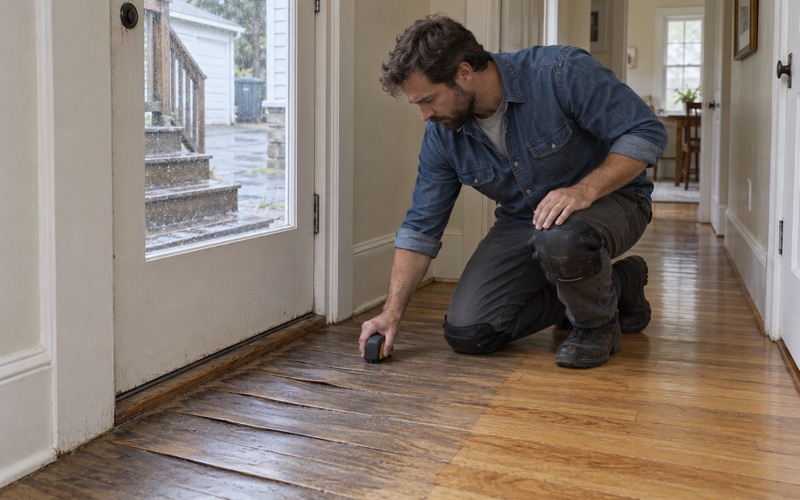
Shared kitchens and bathrooms mean more spilled water, and a leaking dishwasher or radiator valve can go unnoticed in an apartment where everyone assumes someone else saw it. Boards that soak up water swell at the edges and start cupping. We trace the source, dry the area and read it with a moisture meter before any board is replaced.
Pet urine stains and dark water stains around plant pots usually go deeper than sanding can reach. Rather than chasing them with the drum sander and thinning the whole room, we cut out the affected boards and weave in matching ones. When the damage came from a burst pipe or an overflowing appliance, we document it room by room for the adjuster.
Sun Fade and Rug Shadow
Bright rooms in an older flat often show a sharp outline where a tenant’s rug sat for years while the open floor around it faded or darkened. Sanding removes most rug shadow along with the old finish. We then lay stain samples on the bare wood so the owner can see how the evened-out color reads before a new coat is chosen.
Refinishing Between Leases
The gap between one lease and the next can be a few days or a few weeks, and a floor project has to fit inside it. Planning starts with what the floor can take, what the building’s age requires before sanding, and how long the chosen finish needs before furniture and boxes come back in.
Recoat or Full Sanding
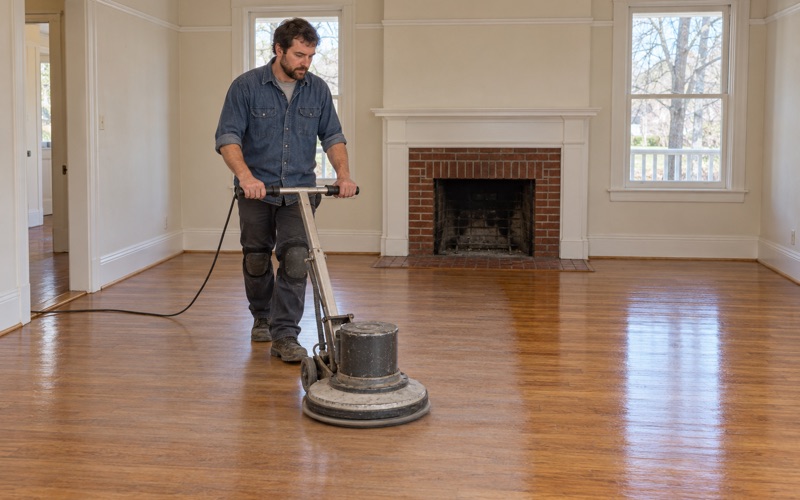
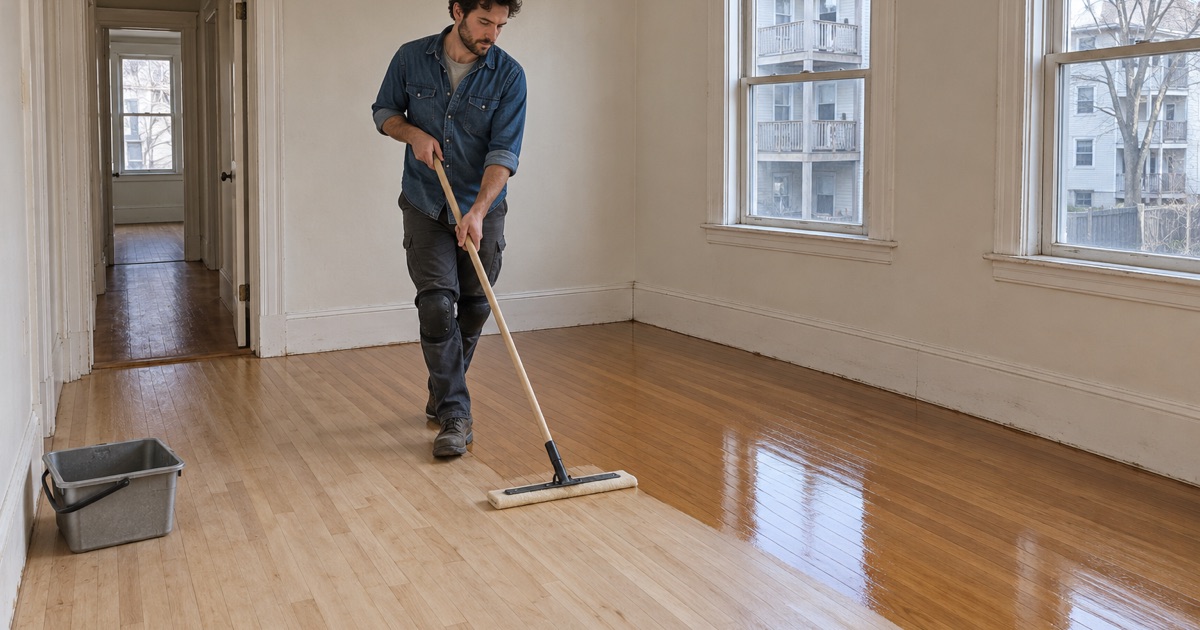
A screen and recoat is the faster and less expensive option when the finish is scuffed but intact. A full sanding is the right call when traffic lanes, stains or deep scratches reach the wood. On older flats we check how much wood remains above the tongue before promising either, because a floor sanded every few years may have only one or two sandings left.
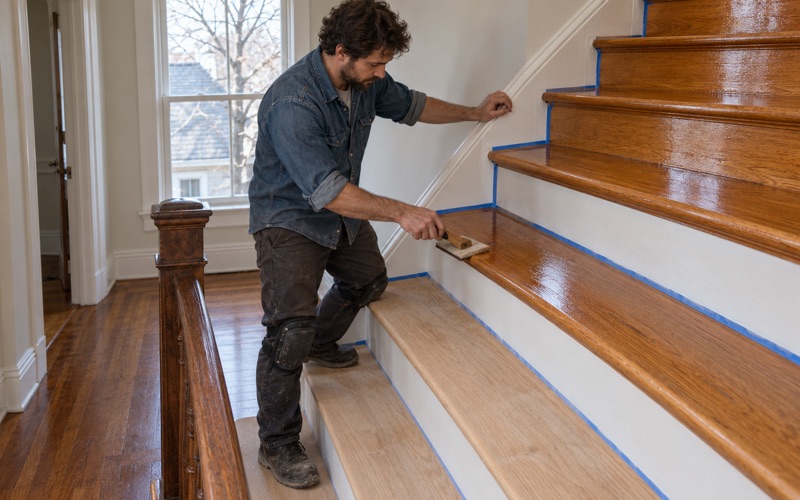
Where a floor is already thin, we sand lighter, replace individual boards that are too far gone, and steer the owner toward recoats in future gaps between tenants. That keeps an original oak or maple floor in service far longer than repeated full sandings would. Stairs up to a second-floor unit are quoted tread by tread, never by the square foot.
Lead and Old Finishes in Older Buildings
ACS 2024 5-year data shows 48.8 percent of Medford’s housing units were built before 1940, and 75.9 percent before 1980. Massachusetts runs its own lead-safe renovation rules for homes built before 1978, so we check the build year and any painted surfaces, such as thresholds, stair risers and quarter round, before any sanding begins.
Old wax and cleaning-product residue are common on rental floors that have been mopped by a long string of tenants. We test for both and remove them before a new finish goes down, so the coat bonds instead of peeling. If a kitchen still has old resilient tile with black mastic underneath, we leave it undisturbed and stop until the right trade has handled it.
Timing Work Near Tufts
Because many leases near campus follow the academic year, late spring and summer are when owners most often want floors done. Booking ahead of the move-out date lets us measure moisture, confirm the floor’s thickness and lay stain samples while the unit is still occupied, so the actual work can start the day the last tenant leaves.
We use finishes that fit the Massachusetts VOC limits for wood coatings, which are stricter than the federal ones. A waterborne polyurethane usually allows light foot traffic the next day and furniture a few days later, which suits a tight gap between leases. Oil-modified polyurethane takes longer to cure and is better saved for owner units with time to spare.
- 20+ Years on Wood Floors
- Stairs Quoted Tread by Tread
- Lead Checks Before Sanding