Newton Wood Flooring has spent more than 20 years on wood flooring in Needham and across the area, and a growing share of that work begins with water rather than wear. A floor that took on storm water needs to be dried, measured and judged before anyone sands it, replaces boards or chooses what goes down next.
That is the order we work in. We trace where the water came from, dry the room, read the boards and the subfloor with a moisture meter, and only then decide between repair, refinishing or replacement. Pulling up a floor that would have recovered costs an owner money, and laying new wood over a wet subfloor wastes it.
This page covers what to do in the first two days after water reaches a floor, which materials hold up on the lowest level of a house, and how to time floor work around a wet summer. Repair and refinishing of dry, older floors follow the same careful sequence, starting with how much wood is left to work with.
What August 8, 2023 Showed About Needham’s Ponds and Brooks
Needham sits among ponds, brooks and reservoirs, and most days that water stays where it belongs. The storm of August 8, 2023 showed how quickly it can leave its banks, and the pattern of where it went is useful for anyone deciding what to put on a lower floor here.
A Short, Intense Storm on Top of a Wet July
Two days after the storm, the Town’s DPW director, Carys Lustig, described it on Needham Channel as a very small, localized and intense event that dropped a lot of rain in a very short time. It did not arrive on dry ground. July had been exceptionally wet, and the drainage system had already used up much of its capacity.
That combination matters for floors. A single downpour after a dry spell often soaks in or runs off; the same downpour after weeks of rain has nowhere to go. Groundwater is already high, storm drains are already working, and water finds the lowest openings in a house, which are usually a basement, a garage or a door at grade.
Where the Water Went
The director named the places that flooded: Great Plain Avenue near Sportsman’s Pond, Alder Brook, the Reservoir area, Rosemary Pond and Rosemary Brook, the Junction at Chestnut Street and downtown. Her summary was blunt: basically any open water body in town flooded. High Rock School and the DPW building took on water too, and two sewer overflows occurred.
We read that list as a description of how water moves in Needham, not as a map of which houses are at risk. No flood map was part of that report, and plenty of homes near those ponds stayed dry. What it does tell an owner is that open water and low ground respond together when a cloudburst lands on saturated soil.
What It Meant Inside Homes
The damage reported in homes was in basements and garages, along with single-level homes. Those are exactly the rooms where wood flooring is most exposed, because there is no floor below to absorb a leak slowly and no height to keep the boards above standing water when it comes in under a door.
With 83.1 percent of Needham’s occupied homes lived in by their owners, according to the Census Bureau’s 2024 five-year estimates, most of those floors belong to the people who stand on them every day. That changes the decision. An owner weighing repair against replacement is planning for years in the house, not for the next tenant.
Looking for wood-flooring closer to Wellesley? See Wood-Flooring in Wellesley.
The First 48 Hours After Storm Water Reaches a Wood Floor
Wood takes on water fast and gives it up slowly. What happens in the first two days decides whether a floor flattens out again or has to come up. For rental housing, Massachusetts sets the clock outright: 105 CMR 410.500(B) requires surfaces to be dried within 48 hours after a leak or flood.
Stop the Water and Get It Off the Surface
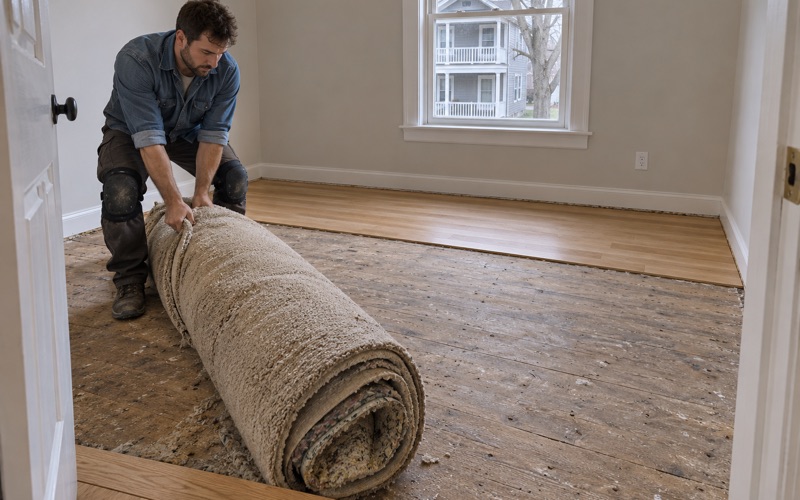
Once it is safe to enter the room, remove standing water with a wet vacuum, mops and towels. Pull up rugs, carpet pad and anything stored on the floor, because a wet rug pressed against oak keeps feeding it water for days. If the water came from outside or a sewer backup, treat it as contaminated and keep children and pets away.
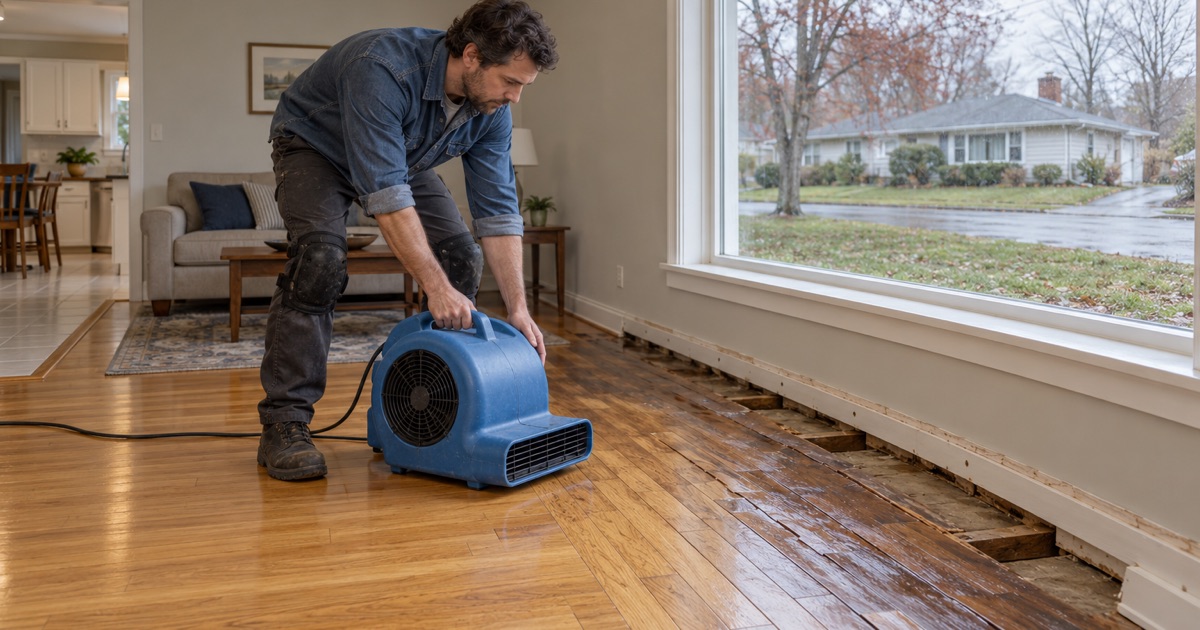
Then move air. Open the room to dry, conditioned air, run fans across the floor surface and use a dehumidifier if you have one. Do not turn the heat up and close the door, because trapped warm, wet air drives moisture deeper into the boards. Photograph every room before anything is moved or thrown away.
Reading the Floor Before Deciding Anything
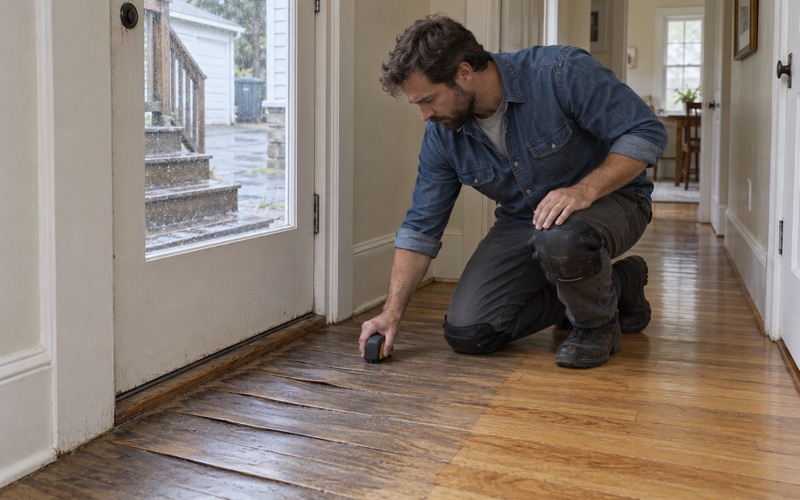
When we arrive we trace the source first, then take moisture meter readings across the boards, at the edges and in the subfloor wherever we can reach it. Comparing those readings with a dry floor elsewhere in the house tells us how far the water spread under the surface, which is often well past the visible water stains.
We document each room for the adjuster as we go, with readings, photographs and the extent of any cupping or buckling. That record is useful whatever the claim decides, because it shows exactly what the floor looked like before drying changed it. We do not predict what a policy will do; we give owners the evidence their agent asks for.
Cupping, Crowning and Why We Wait
Wet solid hardwood swells from the bottom up, and the edges of each board rise into a cup. Sanding a cupped floor flat while it is still wet is a common and expensive mistake: as the wood dries, the centers stay high and the floor crowns. Board gapping follows once the swelling eases, and some boards never fully close again.
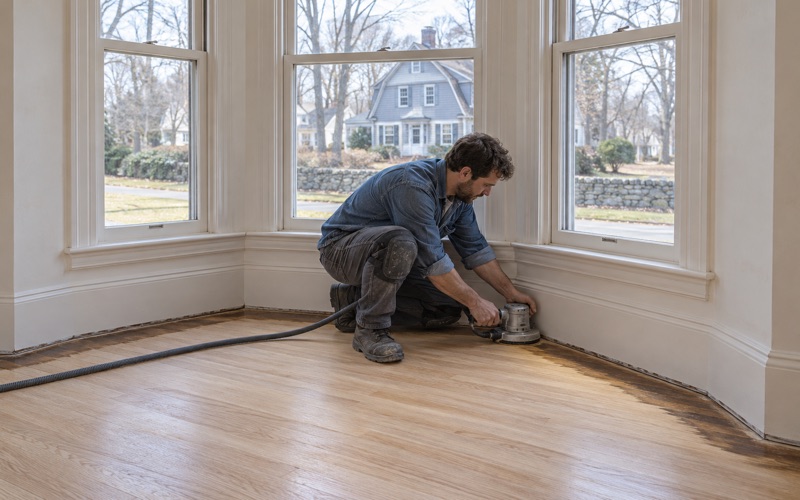
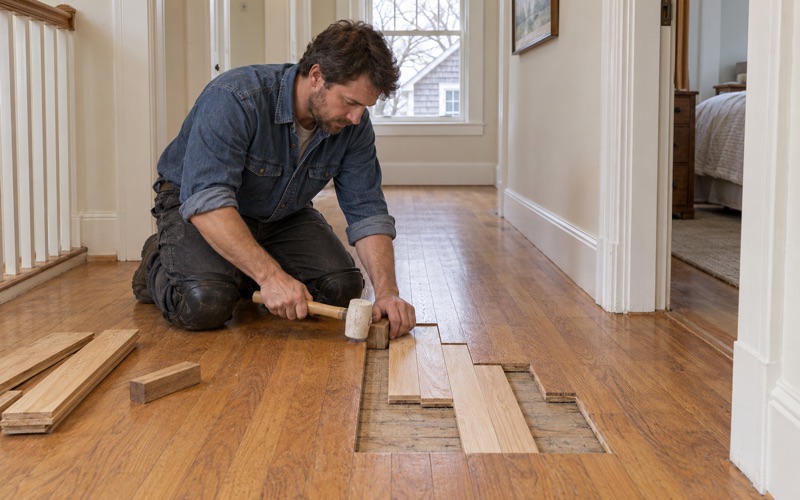
So we dry first and sand later. Many floors that cupped badly after a storm settle back far enough to sand and refinish once the readings match the rest of the house. Boards that split, buckled off the subfloor or stayed dark from water are replaced with a weave-in repair, so the new wood reads as part of the old floor.
Basements, Garages and One-Level Rooms: Choosing the Lowest Floor
After a storm like the one in August 2023, many owners rethink the floor on the lowest level of the house. The right choice depends on moisture we can measure, not on how the room looks during a dry month.
Measure Before You Choose
We take readings on the concrete or subfloor, in more than one season when the project allows, and we ask what the room did in the last heavy rain. A below grade room that stays dry all year can take wood. One that showed damp corners in July, or took water in August, needs a different plan or no wood at all.
Those readings also decide the vapor retarder and underlayment beneath the floor. We match both layers to the measured conditions and to the NWFA Installation Guidelines, and we tell owners plainly when a room is too wet for wood. Sometimes the honest answer is to fix the drainage or grading first and lay the floor a season later.
Engineered Wood Below Grade
For most basements and lower levels we recommend engineered wood rather than solid hardwood. Its cross-layered core moves far less with humidity, so it resists the cupping a solid strip floor shows after a wet spell. A thicker engineered wear layer also leaves room for a future sanding, which matters in a house the owner expects to keep.
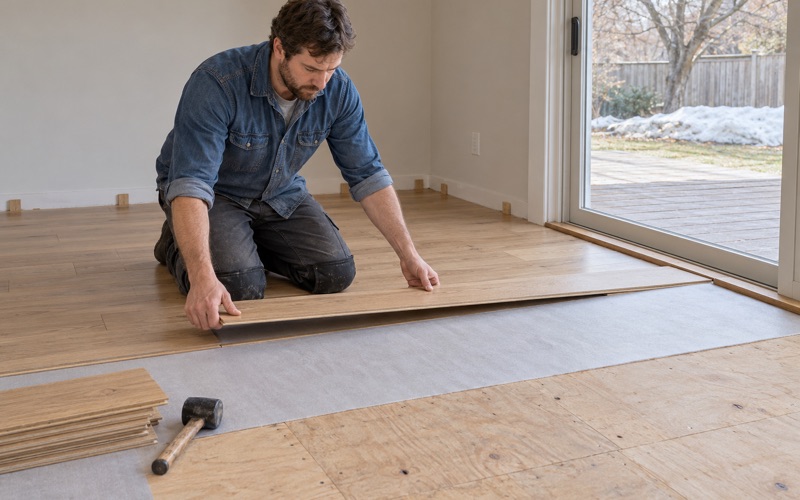
Engineered planks can float over an underlayment or be glued down, depending on the concrete and the readings, and both methods keep an expansion gap at the walls. A reducer or threshold at the stairs and doorways handles height changes cleanly. White oak and hickory, with their higher Janka hardness, wear well in rooms that see boots and gear.
Single-Level Rooms and Spaces Beside the Garage
Single-level homes and rooms at grade beside a garage face the same problem from another direction: water arrives at a door, not through a foundation wall. Here we look at the threshold, the grade outside and how the floor meets the garage step. A good transition and a sealed edge can keep a heavy rain on the right side of the door.
Inside those rooms, prefinished engineered wood or a site-finished floor under a durable waterborne polyurethane both work, provided the moisture readings stay steady. We also suggest breathable rugs and furniture pads, so a small leak shows itself quickly instead of hiding under a backing that holds water against the finish.
Planning Floor Work in Needham Around Wet Seasons
Wood flooring follows the weather inside the house. Timing a job well in Needham means paying attention to the kind of soaked summer that came before August 2023, as much as to any single storm.
Acclimation in a Humid Summer
New wood needs acclimation to the room it will live in, and in a humid summer that takes patience. We bring boards into the house, measure them against the subfloor and wait until the two agree. Installing in July with boards from a dry warehouse invites winter gaps; installing damp wood invites cupping once the heat comes on.
Finishing has its own timing. Waterborne polyurethane and oil-modified polyurethane both cure more slowly in damp air, and a rushed recoat can cloud or stay soft. We schedule site-finished work around the forecast, run dehumidification while it cures, and choose finishes that fit the Massachusetts VOC limits for wood coatings, which are stricter than the federal ones.
Fixing a Floor Months After the Water
Not every water problem shows up the same week. A floor can look fine after a storm and begin cupping in the fall, or show dark water stains along a wall where moisture sat under a rug. When that happens we trace the source again, because a slow plumbing leak or a damp foundation wall can mimic storm damage.
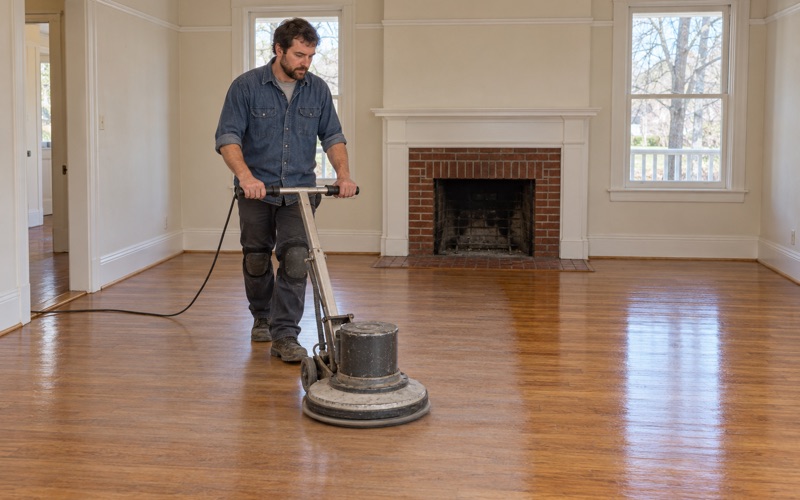
If the cause was old water that has since dried, a weave-in repair and a full sanding often bring the floor back. Before we promise a sanding we check how much wood is left above the tongue, especially on red oak strip flooring that has been refinished before. A floor with little wood left is better repaired and recoated than sanded thin.
Older Houses and What Sits Under the Floor
Most of Needham’s housing was built before 1980, and Massachusetts runs its own lead-safe renovation rules for homes built before 1978. We check the build year and any painted surfaces before sanding. In basements especially, old resilient floor tile and the black mastic beneath it are identified rather than disturbed, and that work pauses until the right trade has handled it.
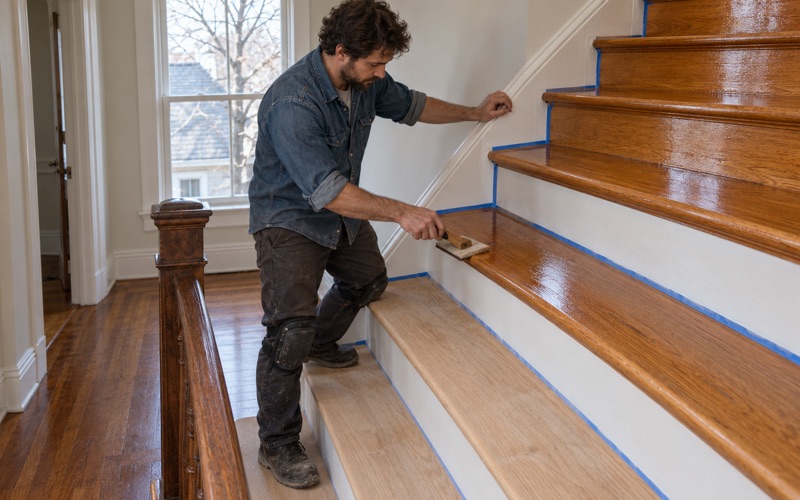
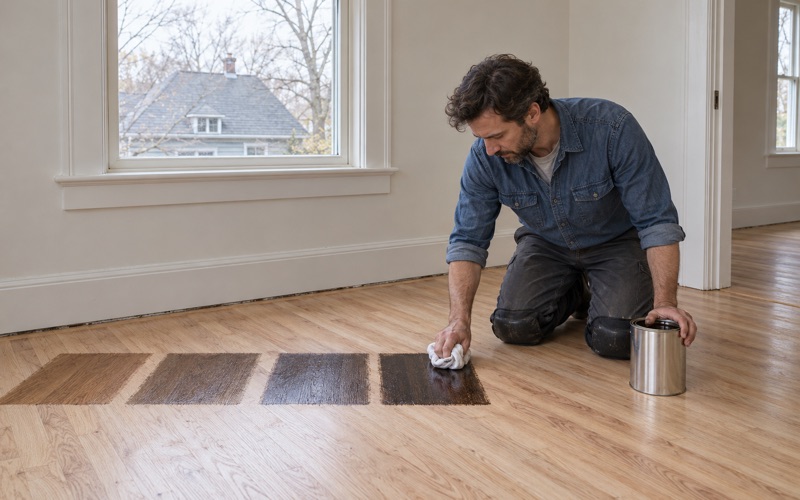
Lower-level floors also tend to collect wax residue and cleaning products over the years. We test for both before any new finish goes down, so it bonds rather than peels. If the basement stairs need attention too, we quote them tread by tread, and we lay stain samples on your own floor so the color is chosen in the light it will live in.
- 20+ Years on Wood Floors
- Stairs Quoted Tread by Tread
- Lead Checks Before Sanding