Newton Wood Flooring handles wood flooring in Roxbury with more than 20 years of sanding, repair and refinishing behind us, and much of our work here happens in buildings where the person paying for the floors also lives on one of them. We plan those jobs around three households at once: the owner’s, and the two tenants whose rent helps cover the bill.
That changes how a quote should read. A rented floor between leases needs to be durable, quick to finish and priced so the rents can carry it, while the owner’s own floor can take slower work, stain samples and careful board repairs. We price the two separately, so you decide floor by floor instead of committing to the whole building at once.
Before any sander arrives, we check how much wood remains above the tongue, note the build year and look for painted trim or old tile that has to be handled first. Those readings decide whether a floor gets a full sanding, a screen and recoat or a targeted repair, and they apply the same way whether the floor is yours or a tenant’s.
Floors in a Three-Decker You Also Live In
What the city counted in 1999
In June 1999, Boston’s Department of Neighborhood Development published a close-up report on triple deckers. It counted 2,295 triple-decker buildings in Roxbury, 44 percent of the neighborhood’s one- to three-family structures and 60 percent of their units. Those are 1999 figures rather than a current count, but they explain why so many of our Roxbury calls involve three floors under one roof.
The same report described the arrangement plainly: triple deckers allow an owner to live in one unit while renting two units for income. Citywide, the FY99 assessing figures in that report showed 53 percent of Boston’s three-family buildings as owner-occupied. That is a citywide number from 1999, and we treat it only as background for how long the owner-landlord pattern has been part of Boston housing.
Owners still living in the building
A more recent reading points the same way. Census estimates for ZIP 02119, which covers much of Roxbury, count 708 of 3,164 owner households living in buildings with three or four units, about 22.4 percent of owners there. A ZIP code does not follow the neighborhood line exactly, so we read that as a labeled proxy rather than a neighborhood total.
The Boston Planning Department put Roxbury’s owner-occupied share at 24.5 percent of occupied homes in 2025, so most households here rent. For us, the practical meaning is that the owner who calls is often both client and neighbor to the floors being worked on. When the owner lives one level up or down, dust, noise and scheduling matter far more than in an empty house.
Where your floor and the rented floors part ways
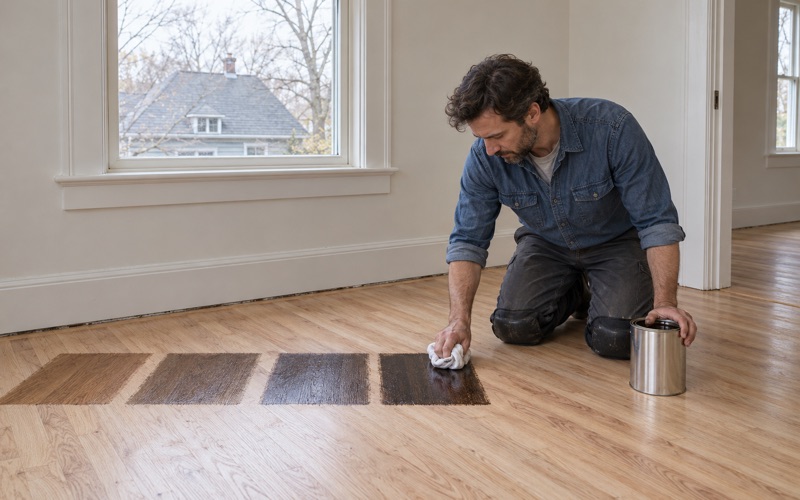
The owner’s floor usually earns the more patient treatment. That is where we lay stain samples in your own light, weave in matching boards where a radiator and its pipes came out, and patch the line where a wall came down so the repair reads as floor. Choices like sheen level, or hardwax oil versus waterborne polyurethane, get a real conversation there.
Rented floors are judged on different terms. They pick up traffic lanes from each new household, scratches from furniture moving in and out, and pet urine stains or water stains near kitchens and radiators. We steer those floors toward a durable, easy-to-maintain finish and a neutral color, so the next tenant inherits a floor that looks cared for without matching anyone’s personal taste.
Looking for wood-flooring closer to Dedham? See Dedham Wood-Flooring.
Refinishing a Rented Floor Between Tenants
Working the gap between leases
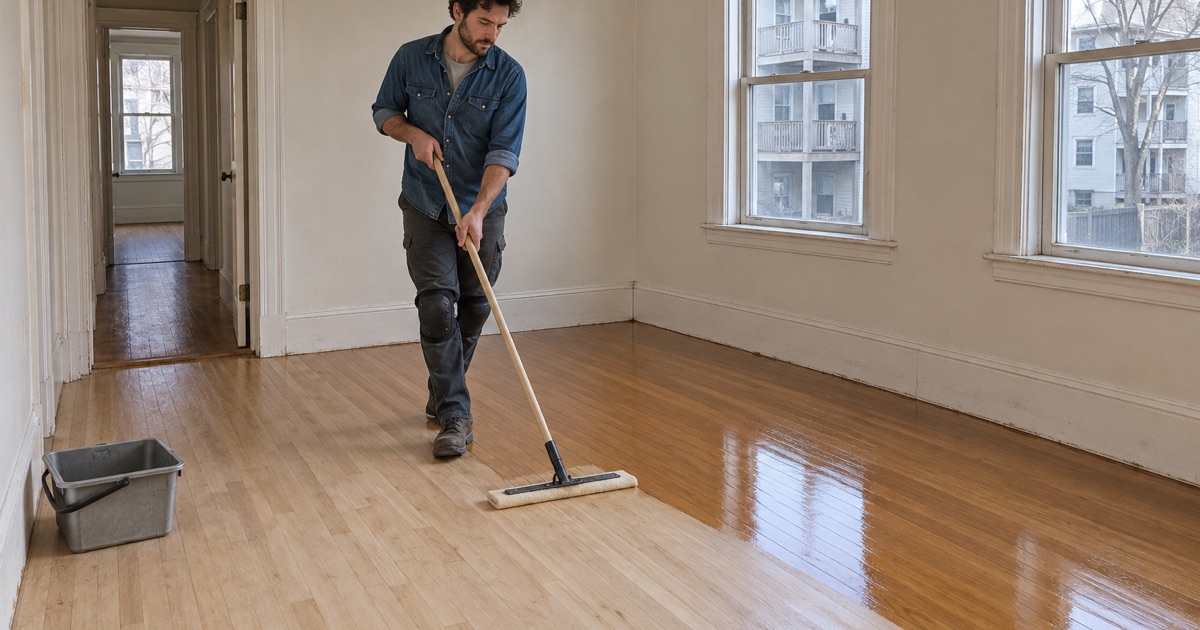
The window between one tenant moving out and the next moving in is usually short, and the floors are often the last item on the list. We schedule turnover jobs around that gap, planning sanding, finish coats and cure time backward from the move-in date so the unit can be shown without a strong odor or a tacky finish underfoot.
Waterborne polyurethane helps here because it dries faster and smells less than oil-modified polyurethane, and every product we use fits the Massachusetts VOC limits for wood coatings, which are stricter than the federal ones. Light use can usually resume sooner than with an oil-based coat, though we still give you a specific number of days before rugs and heavy pieces go back down.
Full sanding or screen and recoat
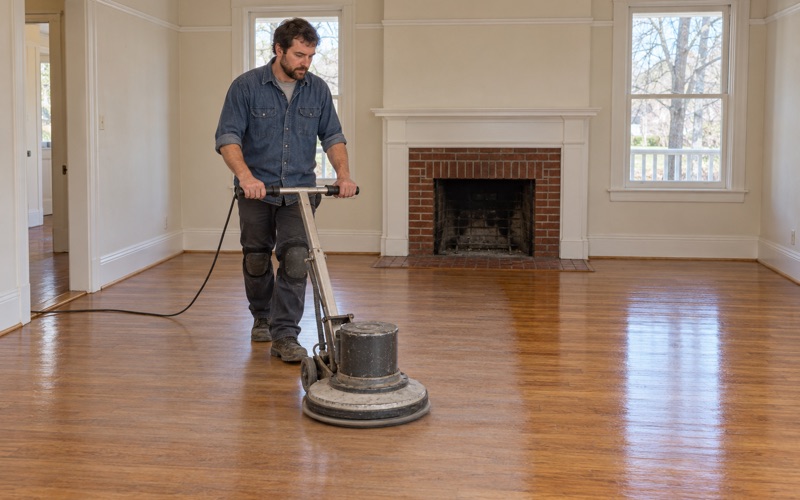
Not every turnover needs bare wood. If the finish is worn but the boards beneath are sound, a screen and recoat scuffs the existing coat and adds a fresh one, which costs less and preserves thickness for later. If there is graying in the traffic lanes, deep scratches or water stains into the wood itself, a full sanding through a proper grit sequence is the honest answer.
Because a rented floor may be refinished several times over the years, we watch what each sanding takes. A drum sander removes wood quickly, so we measure the wood left above the tongue before promising a full sanding and tell you roughly how many more cycles the floor can take. That figure helps you plan the next lease change, not just this one.
Lead, old tile and city rules
Much of the housing here is old: in ZIP 02119, 4,616 of 13,023 units were built in 1939 or earlier. Massachusetts runs its own lead-safe renovation rules for homes built before 1978, so we check the build year and any painted baseboards, thresholds or stair parts before sanding. Dust control with HEPA vacuums matters twice over when tenants share the building.
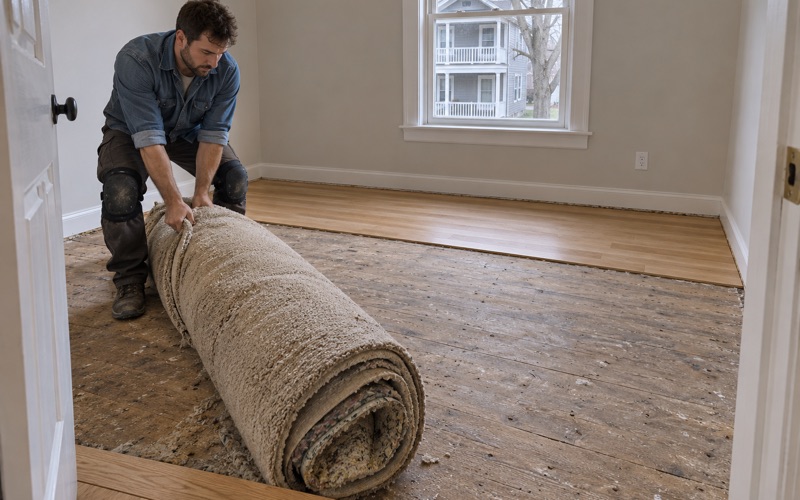
Old resilient floor tile and the black mastic under it sometimes turn up beneath carpet pad in a rented kitchen or hall. We identify it rather than sand through it, and stop until the right trade has handled it. On the paperwork side, Boston requires annual rental registration, though an owner-occupied building with six or fewer rental units is exempt from the city’s five-year inspection cycle.
Keeping Three Floors in Shape on a Rental Budget
Why the 1999 report talked about repair money
The 1999 city report described a hard stretch for Roxbury triple-decker owners. The median sales price fell from $152,500 in 1990 to $67,000 in 1994, then recovered to $130,250 by 1998. The report warned that owners faced limited access to financing for repairs and maintenance, so costs that would normally be financed over time had to come out of the rents.
That pattern still shapes how many owners approach their floors: work gets paid from rental income, one unit at a time, rather than through a single large loan. We quote in a way that supports it. Each floor gets its own line, each repair is priced on its own, and you choose which unit goes this year and which waits for the next turnover.
Repair before replacement
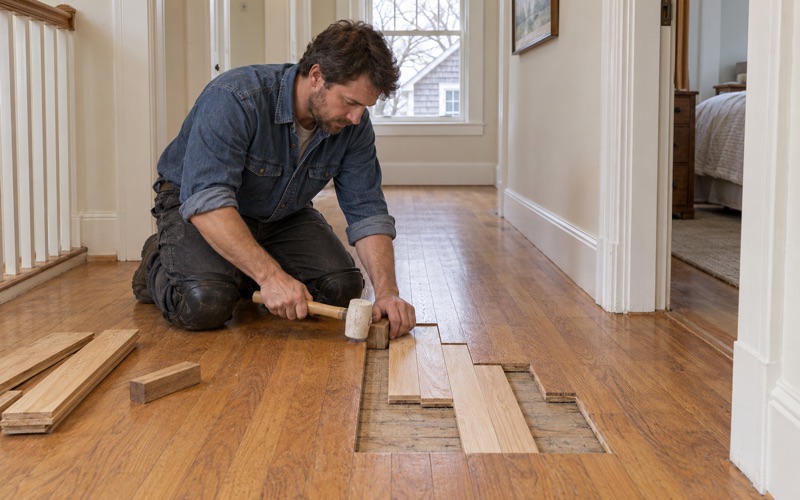
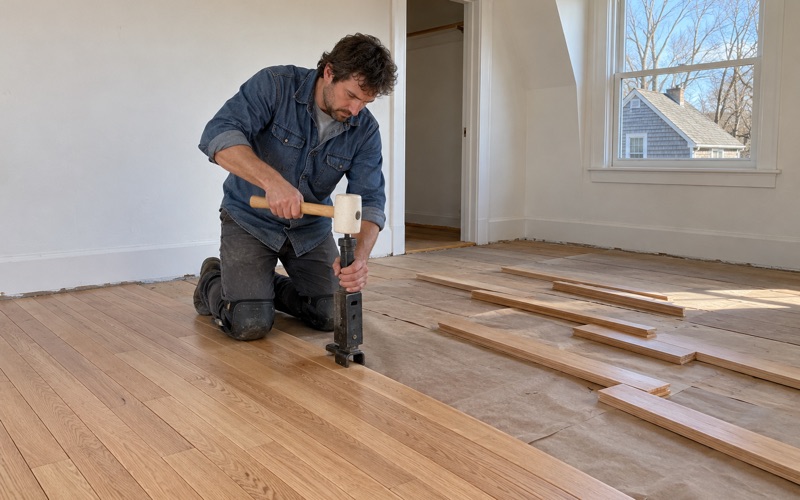
On a rental budget, replacing a whole floor because of one damaged area is rarely the right call. We do board replacement and weave-in repairs where boards are split, stained through or cut for old pipes, working matching boards into the existing pattern. A repaired and refinished floor costs a fraction of new solid hardwood and keeps the room’s character intact.
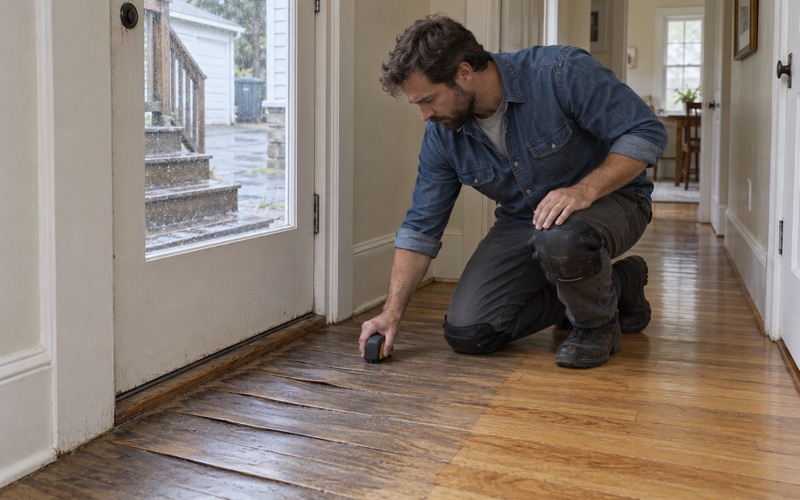
We also look for problems that grow when ignored. Cupping or crowning near a kitchen or bathroom points to moisture, and we read it with a moisture meter and trace the source before replacing anything. Exit holes and fine frass can signal powderpost beetle activity in old boards, which should be confirmed before refinishing money goes into the same wood.
Stairs and shared halls
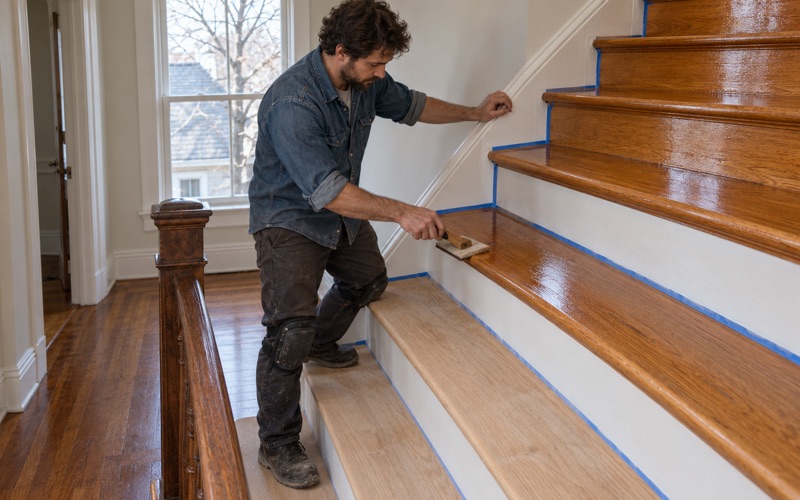
In many owner-occupied buildings the stairs and halls take the hardest wear, because every household uses them. We quote stairs tread by tread, since a staircase is not priced by the square foot, and look at the stair nosing, risers and worn treads separately, so you can fix what is failing without redoing what still holds.
Shared stairs also have to stay usable while the work goes on. We plan finish coats so a path stays open, or time the work for when tenants can use another route, and we tell every household in advance. A staircase refinished in sections takes a little longer, but nobody ends up stuck on an upper floor above a wet coat.
Planning a Floor Project in Roxbury
One floor at a time
We work owner-occupied buildings one floor at a time, so the households on the other levels keep living in the house. That means dustless sanding with containment, HEPA vacuums running throughout and noisy work kept to agreed hours. If your own unit is on the list, we usually plan it for a stretch when you can stay elsewhere for a few days.
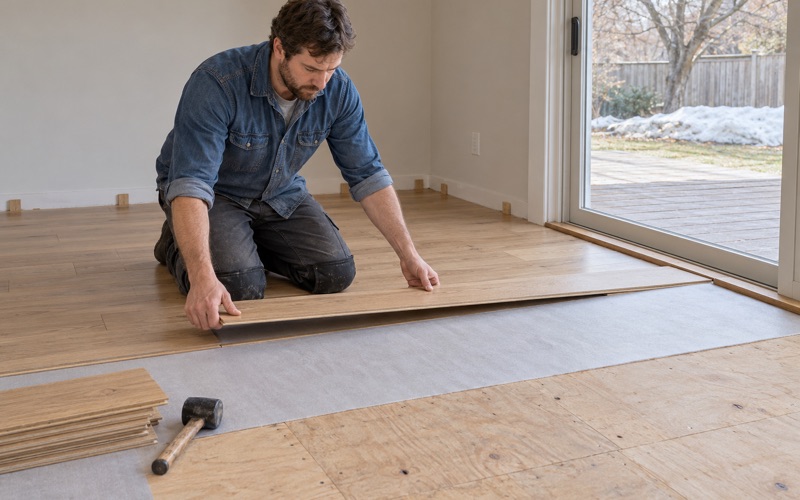
Seasons matter as well. Humid summers and dry, heated winters move wood, so winter gaps between boards that close again in summer are normal rather than a defect. We acclimate any new boards on site and take moisture readings before installing, which keeps repairs from cupping or gapping out of step with the floor around them.
Lower levels
Some owners finish a lower level as storage, laundry space or an extra room. Below grade, we match the floor to the moisture actually measured there, which usually means engineered wood over a proper vapor retarder rather than solid hardwood. A meter reading on the subfloor tells us more than any rule of thumb about what will last.
What to have ready when you call
It helps to know which units are involved, when each lease ends, and whether any tenants have pets or plan to stay through the work. Photos of damaged areas, stairs and any tile showing under carpet let us give a rough estimate before a visit. If a floor has water damage, we can document it room by room for the adjuster.
From there we visit, take readings and give you a written quote broken out by floor and by task. Whether the job is a quick turnover recoat, a weave-in repair where a radiator came out or a full refinish of the floor you live on, the plan reflects who lives on each level and how the work will be paid for.
- 20+ Years on Wood Floors
- Stairs Quoted Tread by Tread
- Lead Checks Before Sanding