Newton Wood Flooring has handled wood flooring in Waltham for more than 20 years, and a good share of that work happens in the narrow window between one lease ending and the next one starting. A floor that looked fine under furniture shows every scratch, gap and stain once the apartment is empty, and both the departing tenant and the owner want to know what it will cost.
We are often the people asked to put that cost on paper. Our job is to read the floor honestly: which marks are the normal result of people living on it, which are damage, and what the least invasive fix is for each. We write that down item by item, so anyone reading the estimate can follow the reasoning.
In practice that means sanding only where sanding is warranted, recoating where the wood is sound, and replacing individual boards rather than redoing a room over one bad spot. Before any machine touches an older floor, we check how much wood remains above the tongue and whether the home predates 1978, since Massachusetts runs its own lead-safe renovation rules for those houses.
Waltham’s Security Deposit Grant and the Floor at Lease End
A Grant Paid Straight to the Landlord
Waltham’s Housing Division runs the HOME Tenant Based Security Deposit Program, known as TBRA. In the city’s own words, it provides grant funds to Waltham residents to pay a security deposit and first month rent payment directly to a landlord. The money moves from the program to the owner rather than through the tenant’s hands.
A 2020 Patch account of the program, which is funded federally through the Department of Housing and Urban Development, reported that the grant does not have to be repaid and that deposit money is returned to tenants when a lease ends. Current eligibility and terms are whatever the city publishes now, so anyone applying should read the Housing Division page rather than lean on an older article.
Half the City Rents
According to American Community Survey estimates, 50.3 percent of Waltham households rent, or 12,828 of 25,498 occupied units. That makes move-out one of the most common moments a wood floor in this city gets judged, repeated every lease cycle in small multifamily houses and large apartment buildings alike.
Age adds to the question. About 69.0 percent of the city’s housing units were built before 1980, so many rental floors have already been sanded by earlier owners, some more than once. That history decides whether a damaged board can be sanded out or has to be replaced, and we measure it before quoting either.
The Rule Behind Every Deduction
Whoever paid the deposit, a deduction for floor damage is governed by state law, M.G.L. c.186 s.15B. A landlord may keep a reasonable amount to repair damage caused by the tenant or people on the premises with the tenant’s consent, reasonable wear and tear excluded. Within thirty days, the owner must provide an itemized list of damages sworn under the pains and penalties of perjury.
That list has to come with written evidence, such as estimates, bills, invoices or receipts showing the actual or estimated cost. In the cases the statute covers, the consequences of getting it wrong are steep: three times the deposit amount owed plus interest, court costs and reasonable attorney’s fees. We are not lawyers and offer no advice on any dispute, but we can supply the kind of floor estimate the statute describes.
Looking for wood-flooring closer to Belmont? See Belmont Wood-Flooring.
Wear and Tear Versus Damage on a Wood Floor
What Ordinary Living Leaves Behind
A wood floor changes with use, and most of that change is wear. Traffic lanes dulled down a hallway and in front of the kitchen sink, a faint rug shadow where a runner sat, sun fade near bright windows and fine scratches in the finish are what years of normal occupancy look like. None of that suggests anyone mistreated the apartment.
Seasonal movement belongs in the same group. Board gapping that opens during a dry heating season and closes again in humid months, often called winter gaps, is the wood responding to the air rather than to anything a tenant did. We note those conditions on an estimate as present and expected, so they are never priced as repairs.
Marks That Go Past Normal Use
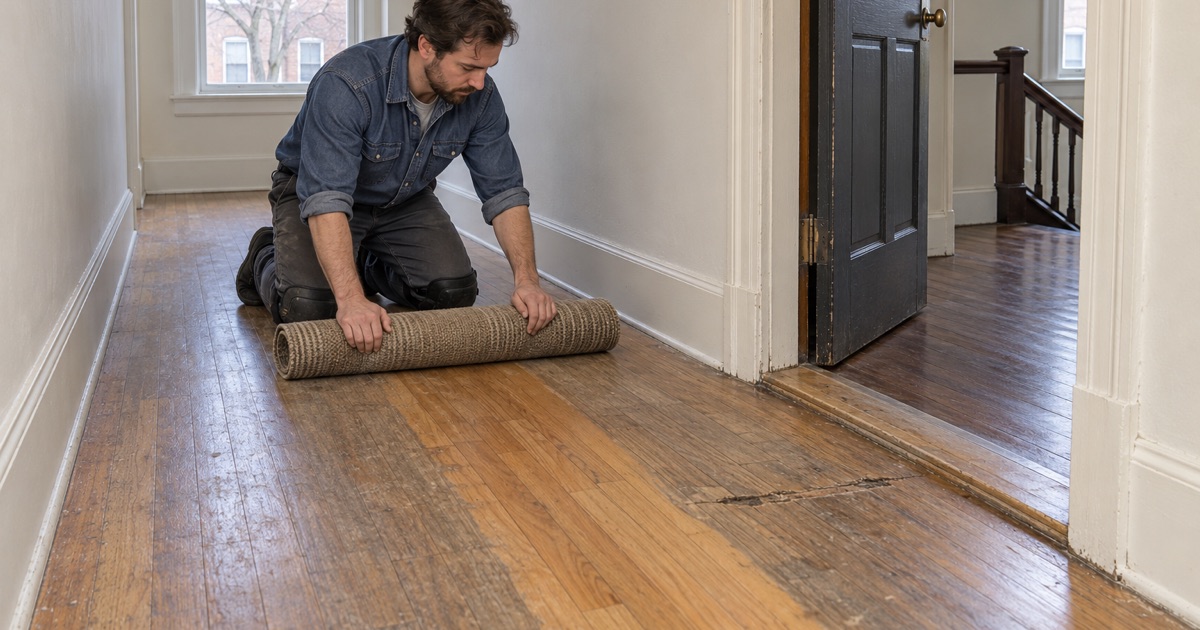
Damage is different in kind. Deep gouges from dragged furniture, burns, dark pet urine stains soaked into the wood, and water stains from a plant or an appliance left to overflow are injuries to the board itself. A fresh coat of finish cannot hide them, because the problem sits below the finish.
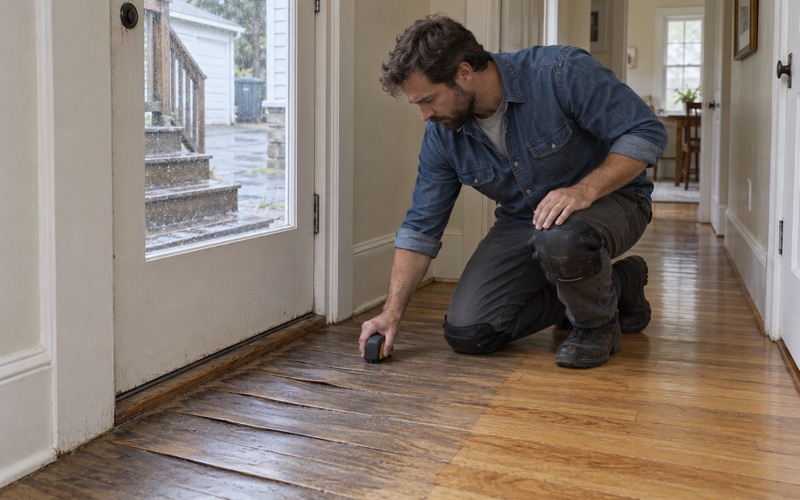
Cupping or crowning across a whole area usually points to water, and the source matters. A tenant who let a spill sit is a different story from a supply line that failed inside a wall. Before we describe anything as tenant damage, we trace where the moisture came from and read the boards with a moisture meter.
The Gray Areas
Some marks call for judgment. A dense scratch pattern might be ordinary wear after a long tenancy and something more after a short one. We describe what we see and what it would take to fix it, and leave the legal characterization to the parties, who hold the lease and the move-in record.
The age of the finish matters too. A floor already worn through to bare wood in its traffic lanes when the tenant arrived was due for work regardless, and our notes say so plainly. That keeps one tenant from being charged for a refinish the floor needed anyway.
What a Written Floor Repair Estimate Should Show
Location, Size and Cause
A useful estimate names the room, the area affected and the specific condition: three stained boards beside the radiator in the back bedroom, not water damage throughout. Measurements and dated photographs tie each line to a spot on the floor that a stranger could find. Vague totals are what turn a deposit conversation into an argument.
We also record what we believe caused each condition and how sure we are. Pet urine tends to darken board edges in a recognizable pattern, while a leaking plant pot leaves a round, localized ring. Where the cause genuinely cannot be read from the floor, the estimate says so rather than guessing.
Method and Materials
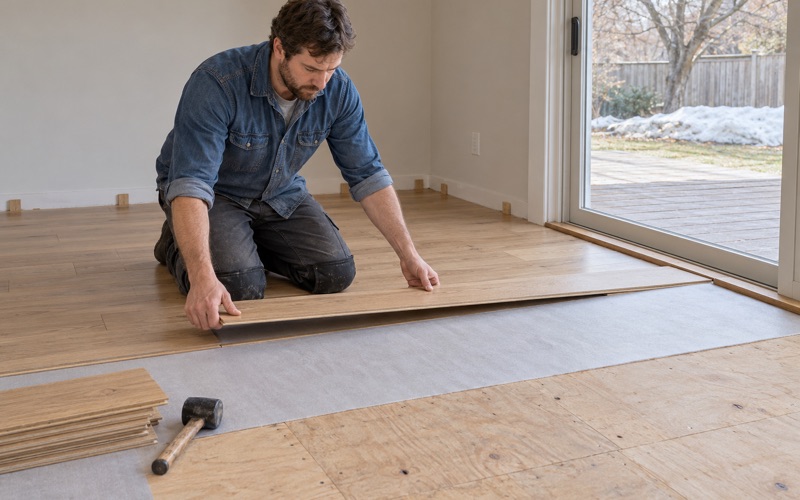
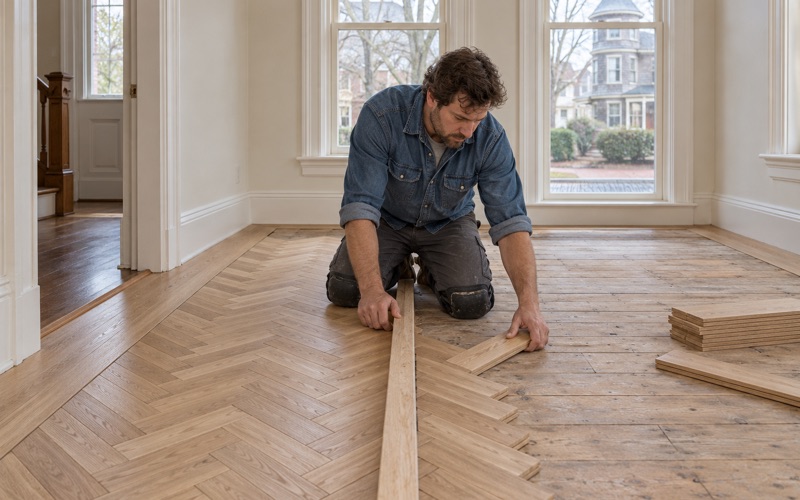
Each line should state the fix. Replacing a handful of boards with a weave-in repair is a different job, at a different price, from sanding and refinishing an entire room. We name the species, whether red oak strip flooring, maple or white oak, and whether the existing boards can be matched from salvage or new stock.
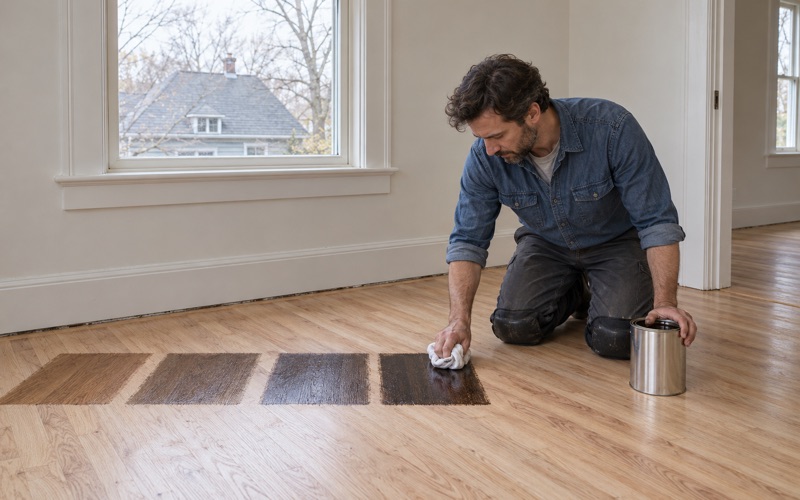
The finish belongs in the method as well. We state whether a repair gets waterborne polyurethane or oil-modified polyurethane, and whether the new color will be blended into the surrounding floor. The finishes we use fit the Massachusetts VOC limits for wood coatings, which are stricter than the federal ones.
A Price for Each Line
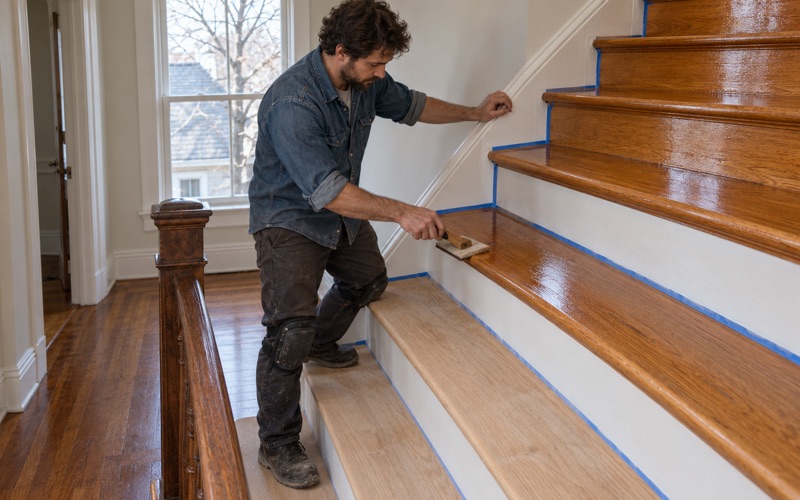
A single lump sum hides which part is repair and which is improvement. We price each item separately, so an owner can weigh one stained section against a full refinish and a tenant can follow the reasoning behind the number. Stairs get their own lines, tread by tread, because a staircase is not priced by the square foot.
Once the work is finished, the estimate can be followed by an invoice that matches it line for line. That pairing, an estimate before and a bill after, is easy to produce when the original document was specific, and much harder when it was a single figure scribbled on a card.
Spot Repair, Recoat or Refinish Between Tenancies
Board Replacement for Contained Damage
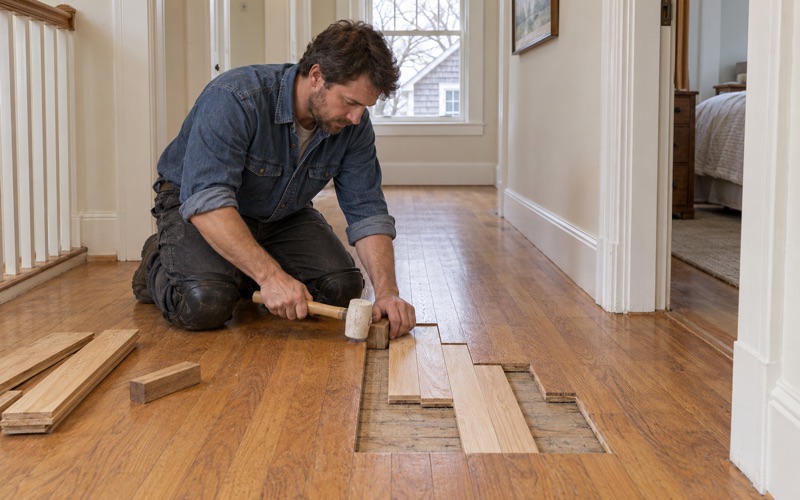
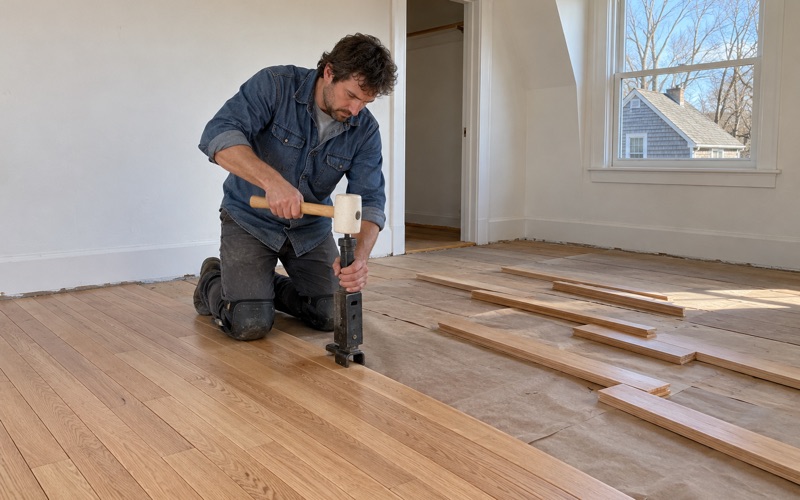
When damage is confined to a few boards, we cut them out and weave in replacements that follow the grain, so the repair reads as floor rather than as a rectangular patch. The rest of the room keeps its finish and the bill stays proportional to the damage. Holes left where old radiator pipes came out get the same treatment, with matching boards instead of filler.
Screen and Recoat
If the wood is sound and the wear sits only in the finish, a screen and recoat is the efficient turnover choice. We abrade the existing coat and apply fresh polyurethane, which restores sheen and protection in far less time than a full sanding and takes nothing from the board’s remaining thickness.
A recoat will not bond over wax residue or some cleaning-product buildup, so we test for both and remove what we find before any finish goes down. Skipping that step is why some recoats peel within months. A recoat also cannot erase pet stains or deep gouges, which need board work first.
Full Refinish
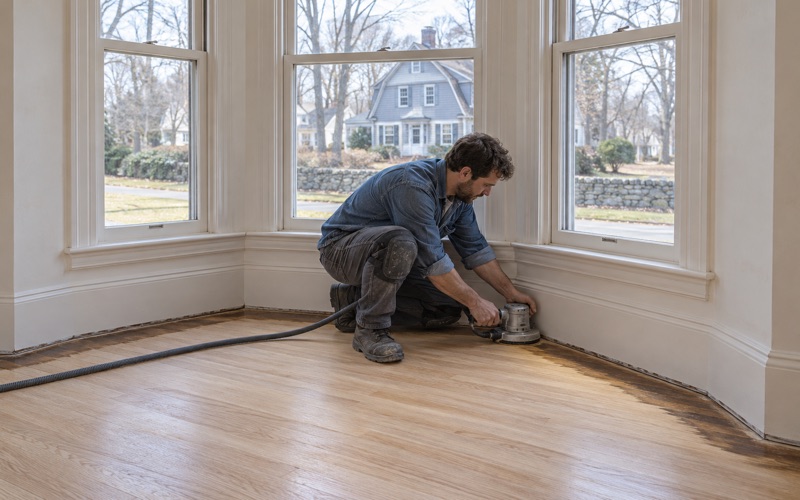
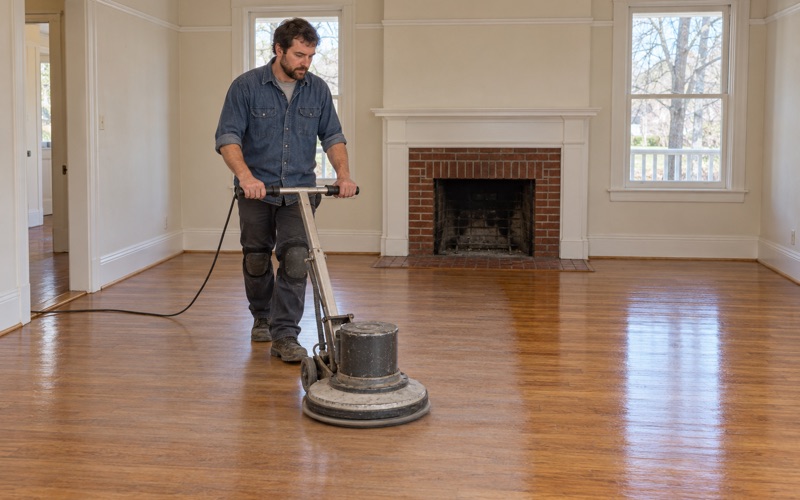
A full sanding with a drum sander and orbital sander, run through a proper grit sequence, makes sense when wear has reached bare wood across a room or damage is spread too widely to patch. Our dustless sanding with HEPA vacuum collection keeps the empty unit, and any occupied apartment next to it, far cleaner than older equipment.
Every sanding removes wood, so we confirm how much is left above the tongue before promising a refinish. A rental floor sanded repeatedly over the decades may have only one more sanding in it, and an owner deserves to know that before spending it between tenants. In older houses, the lead-safe checks described above come before the sander does.
Recording Floor Condition at Move-In
The smoothest deposit outcome starts before the lease does. State law contemplates a statement of condition at the start of a tenancy, and damage already listed there cannot be deducted later unless it was repaired and the new damage is shown to be unrelated. A floor walk-through with dated photos of each room gives that statement real detail.
We can document floor condition during the same visit as any turnover work, noting existing stains, gaps, scratches and finish wear room by room. The City of Waltham Health Department also names floors and staircases among the structural items its code enforcement inspections cover, whether routine or on complaint, so a sound floor serves more than the deposit.
- 20+ Years on Wood Floors
- Stairs Quoted Tread by Tread
- Lead Checks Before Sanding