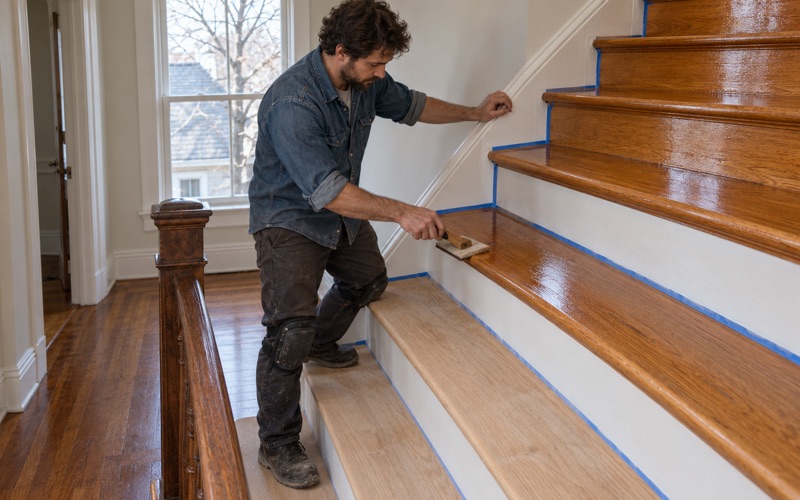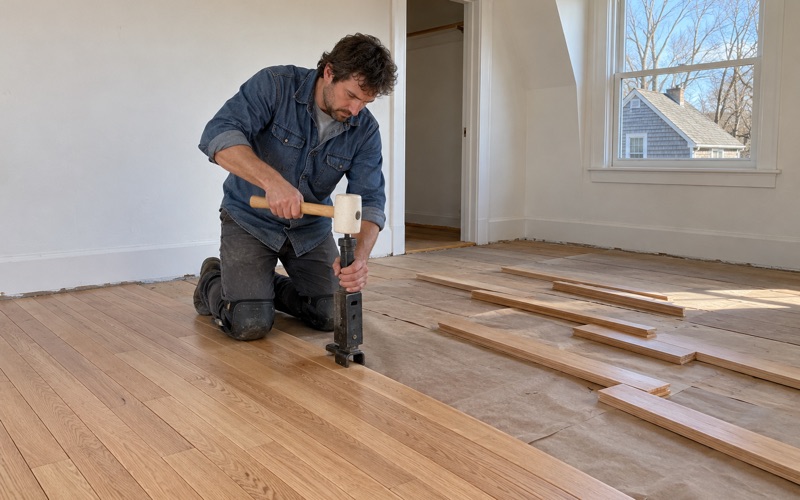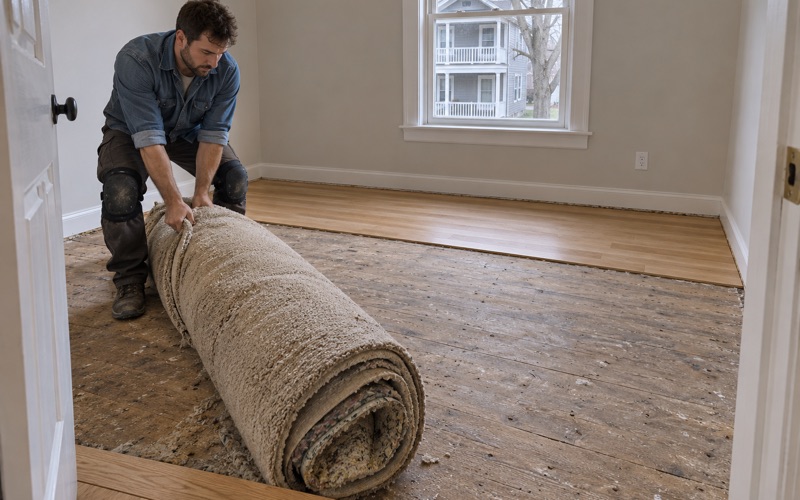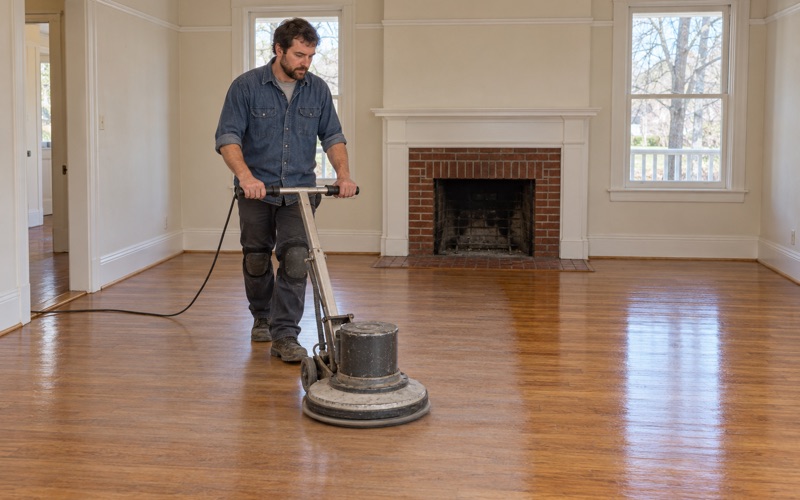
Newton Wood Flooring has spent more than 20 years on wood flooring in Winchester and the towns around it, and lately a growing share of our calls begin with the same observation. A room that used to sit in shade now takes full afternoon sun, and the floor has started to show it in pale streaks, uneven lanes and dark rectangles where the rugs were.
This page is about what light does to a wood floor and what we can do about it. We sand and refinish original oak, maple and pine rather than tearing it out, we lay stain samples on your own boards in your own window light, and we match the finish to a room that now gets direct sun for hours.
Before any of that, we look closely. Every floor gets a check of how much wood is left above the tongue, a look at the build year and any painted surfaces, and a test for old wax or cleaning residue that would keep a new finish from bonding. The answers decide whether a room gets a full sanding, a recoat or a repair.
Winchester’s Thinning Canopy and the Floors Beneath It
Much of the sun-fade work we see here traces back to a change outside the window rather than anything inside the house. Winchester has measured that change carefully, and the numbers help explain why so many older rooms are now brighter than their floors were ever finished for.
What the Canopy Assessment Found
A tree canopy assessment by PlanIT Geo compared USDA aerial imagery of Winchester from 2012, 2018 and 2023. As reported by Winchester News, tree cover fell from 49.3 percent in 2012 to 47 percent, a loss of about 90 acres. The same reporting found the town lost almost 10 percent of its public tree canopy between 2018 and 2023.
Shade matters for more than comfort. Coverage of the assessment noted a difference of several degrees between the temperature under a tree canopy and out in direct sunlight during a heat wave. For a floor, that means a room that once stayed cool and dim through July can now take strong light and heat across its boards for most of the afternoon.
Public Trees and Private Lots
Winchester adopted a Public Shade Tree Bylaw in 2012, and it protects trees on public property such as streets, parks and school grounds. According to the town’s tree committee chair, it does not cover trees on private lots, which is where most removal happens. When a large tree comes down in a neighboring yard, that bylaw has nothing to say about it.
We cannot tell you whether a particular tree is the reason a particular floor changed color, and we will not guess. What we can say is that a south or west window with nothing in front of it puts far more light on the boards than a shaded one, and a finish chosen for a dim room may not suit the new conditions.
Older Houses, Owners Who Stay
According to ACS 2024 five-year estimates, 39.4 percent of Winchester’s homes were built 1939 or earlier, and 81.7 percent of occupied homes are owner-occupied. That combination means a lot of original strip oak, maple and pine, much of it refinished more than once, in houses where the same family will live with whatever finish goes down next.
Owners who plan to stay tend to ask the long-term question: not only how to make the floor look even this spring, but how to keep it from drifting apart again. That question shapes everything below, from which species we expect to darken to how much sanding an old floor can still take.
Looking for wood-flooring closer to East Boston? See Wood-Flooring Services in East Boston.
Fading, Color Change and Rug Shadows
Light changes a wood floor in two ways at once. The finish film ages and shifts in tone, and the wood itself darkens or lightens depending on the species. A floor that sat under shade for decades and then meets full sun can show both changes, and they rarely happen evenly across a room.
How Different Species React to Sun
Red oak strip flooring, one of the most common floors in older houses, tends to warm toward amber, and an old oil-based finish on top often pushes it toward the orange oak tone many owners want to leave behind. Maple usually yellows, while eastern white pine deepens toward a honey or reddish brown with exposure.
White oak and hickory change too, each in its own direction. Knowing the species matters before any color decision, because a stain that looks right on a freshly sanded board will keep moving once the room’s light starts working on it. We identify the species and the existing finish before we suggest a single sample.
Rug Shadows and Furniture Outlines
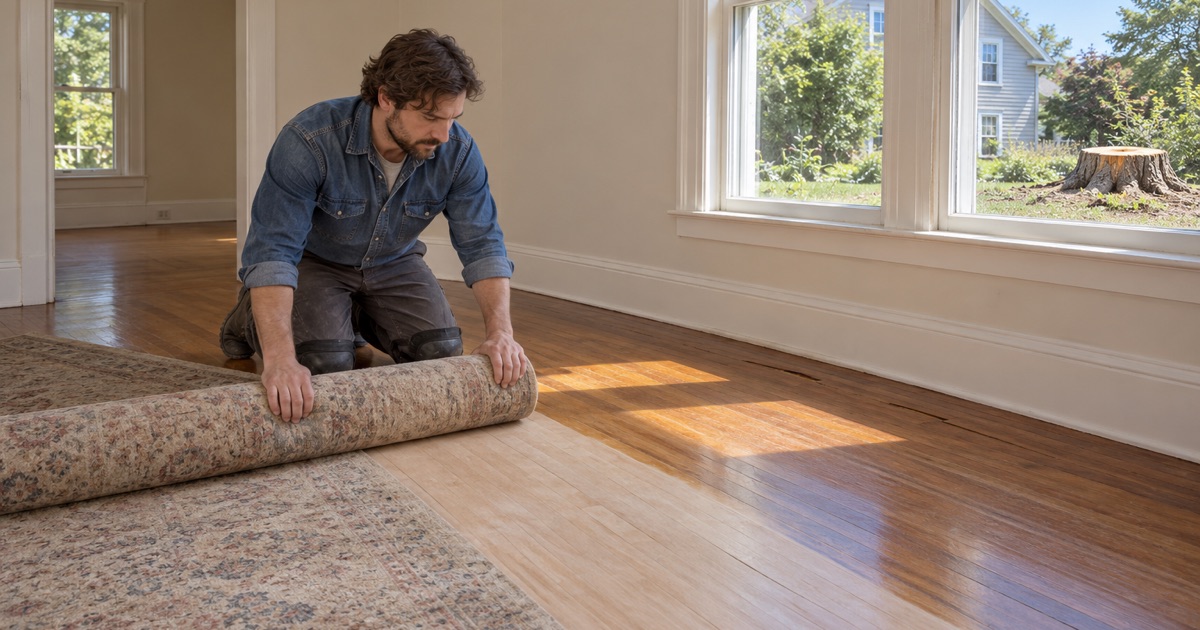
The most visible symptom is the rug shadow: a crisp rectangle of original color where an area rug sat while the rest of the floor changed around it. Sofas, beds and bookcases leave the same outline. When a room goes from shaded to sunlit, those outlines can sharpen, because the exposed boards are now taking far more light than the covered ones.
Moving the rug does not fix it. Light will even out part of the difference over time, but on many floors the covered patch never fully catches up. Sanding removes the aged surface wood and the finish together, which is why a full refinish is usually the only way to make a rug shadow disappear rather than slowly blur.
Fade, Stain or Damage?
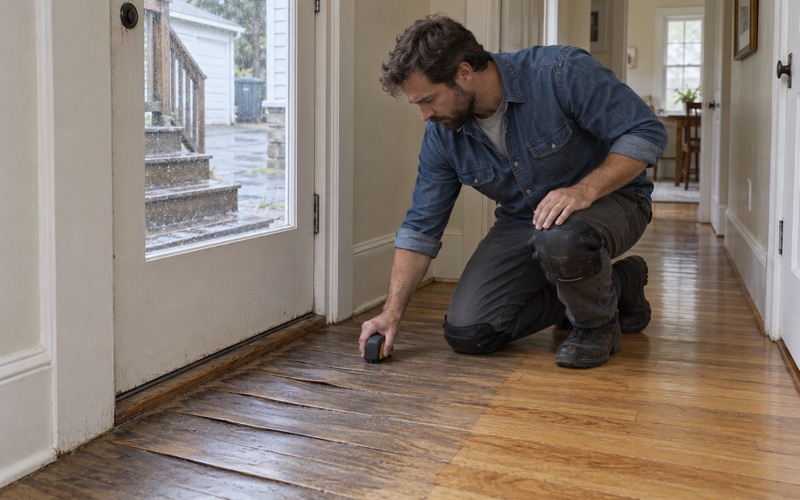
Not every pale or dark patch is sun fade. Water stains, pet urine stains and worn traffic lanes can look similar from across a room, and each one calls for a different repair. Gray or black marks usually mean moisture reached the wood itself, and refinishing alone will not lighten a stain that has soaked deep into the fibers.
Before quoting, we check whether the discoloration sits in the finish, in the top of the wood, or through the board. Finish-level fade sands out cleanly. Deeper stains often mean a board replacement, and we would rather say so up front than promise a uniform floor and discover the problem halfway through the sanding.
Finishes and Window Choices for a Sunnier Room
Once a room’s light has changed, the finish has to be chosen for the room it is now. We pick from finishes that meet the Massachusetts VOC limits for wood coatings, which are stricter than the federal ones, and then narrow the choice by how much sun the floor takes and how the household uses the space.
Waterborne, Oil-Modified and Hardwax Oil
Waterborne polyurethane stays clearer over time than oil-modified polyurethane, which is part of why it ambers less in bright rooms. That makes it a common choice when an owner wants white oak or maple to stay closer to its natural color. Oil-modified finishes add warmth on purpose, which can suit a red oak floor meant to look aged.
Hardwax oil soaks into the wood rather than building a film, and a worn or faded area can be spot-repaired without sanding the whole room. It asks for more upkeep than a film finish. Some finishes are sold as UV-resistant and can slow color change, but no finish halts it, and we tell owners that before they choose.
Sheen, Stain and Sample Boards
Sheen level matters more in a sunlit room than most owners expect. Low-angle sun across a gloss finish shows every scratch, dust track and sanding mark, while a satin or matte sheen hides them. We usually steer bright rooms toward lower sheens, especially in living rooms and bedrooms where the light comes in low across the boards.
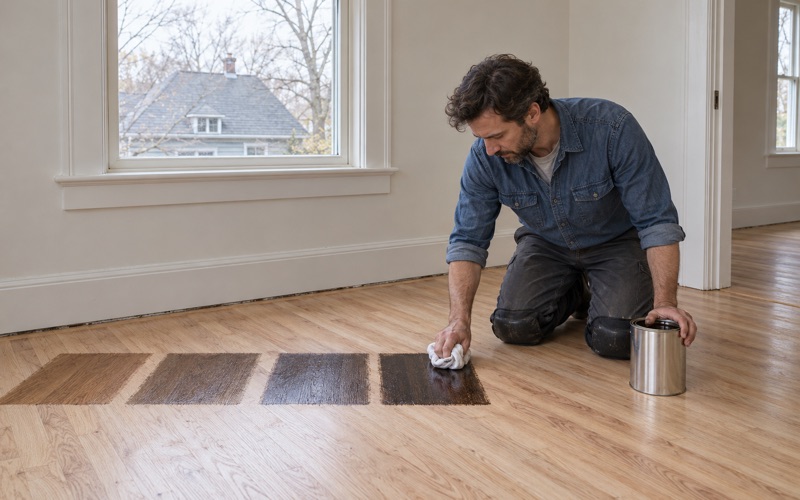
Color is harder to judge. We lay stain samples on your own floor and ask you to look at them at the hour the room gets its strongest light, because a stain that reads warm brown under a ceiling fixture can look red or nearly orange in afternoon sun. Water popping opens the grain first, which helps a darker stain take evenly on oak.
Windows, Rugs and Daily Habits
Window film, shades and curtains reduce the light reaching the floor, and they help most during afternoon hours on south and west exposures. Like finishes, they slow color change rather than prevent it. Rotating area rugs and shifting furniture now and then keeps new outlines from forming while the room settles into its new light.
We are flooring contractors, not window installers, so we will not recommend a specific film or shade product. What we will do is plan the finish around whatever the owner decides about the windows, since a room with heavy curtains and one with bare glass can reasonably end up with different sheens and different stain choices.
Blending a Floor That Has Aged Unevenly
Many of the floors we see in Winchester have aged in patches: one room darker than the next, a hallway in different light than the parlor it opens into, a rug shadow beside a faded window bay. Blending them means deciding what can be sanded, what has to be replaced and what color the whole floor should settle on.
How Much Sanding the Floor Can Take
A floor that has been sanded several times may not have much wood left above the tongue. We check that before promising a full sanding, because cutting too close exposes the tongue and leaves gaps that cannot be refinished away. Where the boards are thin, a screen and recoat refreshes the finish without removing more wood.
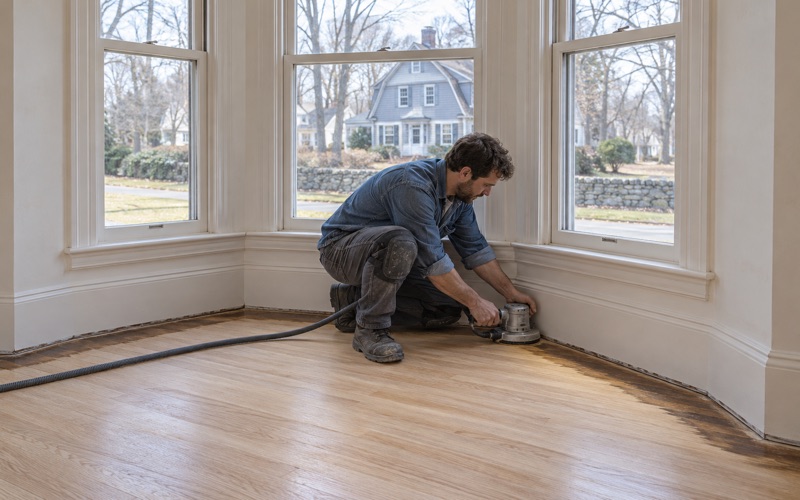
Screening does not remove fade or rug shadows, since it only abrades the finish surface. When the color difference sits in the wood, the floor needs a full sanding with a drum sander and an orbital sander for the edges, run through a proper grit sequence. Our dustless sanding uses HEPA vacuum collection, which matters in a house people are still living in.
Patches That Read as Floor
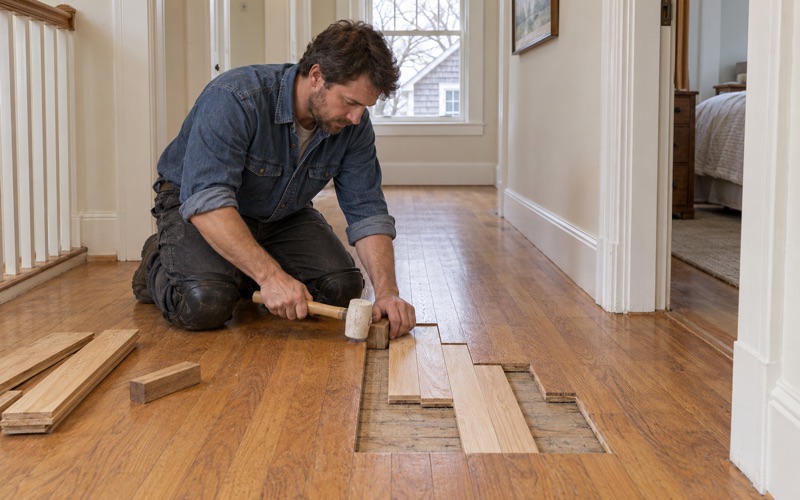
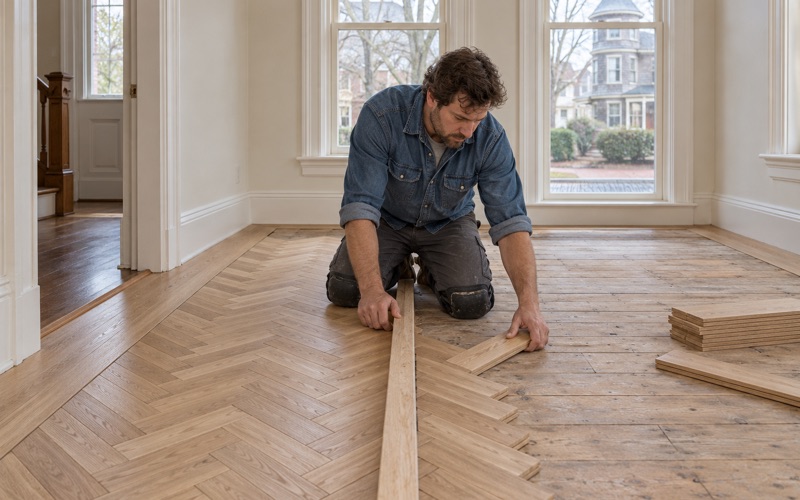
Uneven aging is most obvious where boards have been replaced. A patch where a steam radiator came out, an outlet moved or a wall came down will stand out more in a sunlit room than a shaded one. We weave matching boards into the surrounding floor rather than filling the gap, so the repair follows the run of the boards instead of forming a square.
New wood will not match old, sun-aged wood on day one, and we explain that before the work starts. Sanding the patch and the surrounding floor together and finishing them as one surface narrows the difference. A stain that sits between the old and new tones often does the rest, and we test that choice on the floor before committing.
Checks Before Sanding an Older Floor
In a town where so many houses predate 1940, lead paint is a real possibility on baseboards, thresholds and painted floor borders. Massachusetts runs its own lead-safe renovation rules for homes built before 1978, so we confirm the build year and look for painted surfaces before any sanding starts, and we plan the job around what we find.
We also look for old resilient tile and the black mastic under it in back halls and kitchens, and when we find it, we stop until the right trade has dealt with it. Old wax residue gets tested and removed before a new finish goes down. Those steps are slower than sanding straight through, but they keep a fresh finish from peeling.
- 20+ Years on Wood Floors
- Stairs Quoted Tread by Tread
- Lead Checks Before Sanding